Rise of the Planet of the Apes (2011)
 Printer-friendly version
- No explicit material
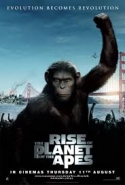 The original "Planet of the Apes" introduced us to a world where humans are secondary to our closest family species in the great apes. The film relaunch of "Planet of the Apes" set those events in our future. "Rise of the Planet of the Apes" explains why these species are uplifted to human-level intelligence and the resulting conflict when humans attempt to deal with "alien" emotions, attitudes, and actions.
The film focuses on the development of an uplifted chimpanzee named Caeser, who gains human-level (or greater) intelligence as a result of the pharmaceutical testing of a potential Alzheimer's cure on his pregnant mother. Raised by the scientist who developed the cure, the film presents Caeser's life from a newborn to his role as a leader of a group of uplifted animals.
Why you should watch it
As we discover more animals with identifiable intelligence and even language, there is a rising sentiment to protect and nurture these intelligences and a need to consider which species are given greater rights. Our current protection of animals tends to break along domesticated pets or levels or endangerment, but intelligence is not part of the conversation.
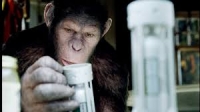 "Rise of the Planet of the Apes" provides a view of an intelligent and emotional creature presented as a human in a chimp (or orangutan or gorilla) body. While it is possible we will uplift individual animals or perhaps entire species, the film's real value is presenting Caeser as a near-human, caught in a role neither he nor our society is capable of handling. The presentation is so complete and honest, one should wonder if a real-life Caeser would be accorded human rights and how much of a fight there would be.
(Minor spoiler) The film left me thinking language, or at least the ability to communicate clearly, will be the change agent when we begin assigning greater rights to more intelligent species. Through the film, Caeser continues to master sign language, an accepted form of human communication. Yet, since only a small percentage of the voting public use this method, I wonder how influential it would be in pushing for those rights.
At the end, his ability to speak English might be the flashpoint. A monkey rattling at his cage doesn't always elicit concern over animal rights. A monkey signing to those who do not know the language would not identify communication, but a monkey saying, "Please let me go" certainly would. Now that software is being developed to translate animal speech into human speech, such as this system translating dolphins, it may be a matter of time before their speech requires we revisit animal rights as a whole.
"Rise of the Planet of the Apes" is an interesting and sometimes uncomfortable film I highly recommend.
Topics Covered
Futurists will enjoy the topics explored in the movie, including:
- The ethics of increasing animal intelligence
- Animal rights and freedoms
- The bioethics of viral testing on animals
- Questions about intelligence and when it becomes sentience
If you enjoyed this review and intend to buy this film, please consider buying through this link.
Your overall rating:
Quality of the work (writing, art, photography, etc):
How believable?:
How original?:
Story tags (elements of how we live):
Location of story:
Years into the future:
 Interested in the social impact of our future advancements, Daryl developed and built Regarding Tomorrow as a platform to share and discuss our collective hopes and fears of the future. Daryl's background is in education, including graduate studies in special needs and a masters in instructional technology from UVA's Curry School of Education. He has worked as a high school teacher and has over 10 years of university experience in the US and Canada.