Media reviews

Soft Apocalypse

Soft Apocalypse book coverAs atmospheric carbon rises towards 450 units per million and the pitch of climatologists reach higher levels of alarm, Soft Apocalypse offers a worst-case scenario of what a slow collapse of society might look like from the inside. Where McIntosh's Bridesicle/Love Minus 80 revolved around a misuse of life-saving technology, Soft Apocalypse is an avalanche of Hell unleashed on our planet. It is futurehorror without a Freddy or Michael, where the bad guys numbered in billions around the globe. Many of them bad guys who live among us today, but who haven't been forced to show their true natures as long as the distractions of civilization keep them in check.

This story could easily be the world outside as everything unraveled in Cormac McCarthy's The Road. Watching the slow collapse of society through Jasper's narrative, we see humanity returning to its fierce roots as the veneer of civilization is slowly stripped away. Soft Apocalypse is a message you live through as you read it.

Surrogates (Graphic novel and 2009 film)

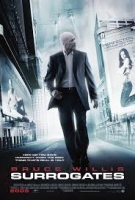
Cover of Surrogates graphic novel  Surrogates movie poster The Surrogates is a 2005 comic series that explored a future society where humans control robots from the comfort and safety of their own homes. These robots provide what appears to be perfect telepresence by connecting the owners to the outside world - without risk to their physical bodies.

The series was made into a motion picture in 2009, titled Surrogates, with a slightly altered storyline in which humans can be killed through through the Surrogate interface. In both works, investigators (police in the graphic novels and FBI agents in the film) attempt to solve a series of crimes involving attacks on surrogates, with the investigation taking them deep into societal issues between a modern world and a militant group who refuses to interact with surrogates.

They are both engaging stories exploring extreme telepresence and the positives and negatives that come with the technology. The graphic novels are thoughtful and very well written with a lot of believability. The film is science fiction as an action film, though Surrogates takes time to explore additional elements not included in the graphic novels, adding to the plot and in the background of the main storyline. It's an intelligent movie behind the gunshots and car chases.

TiMER (2010 comedy)

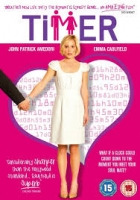
Timer movie posterWhile most science fiction uses action films to hide ways to make us think, TiMER is a relationship comedy. Set in a future where a wearable device counts down the time until the wearer is destined to meet his or her soul mate, this soft science fiction film looks at what we lose when we give too much control to a technology.

In the film, Oona (played by Emma Caulfield from Buffy the Vampire Slayer) has a TiMER that doesn't register a number - meaning her soul mate has not yet had a TiMER installed. The film explores the myriad ways the service influences how users seek, wait, and find love. It's an interesting film that is a nice break from the explosion filled dystopias Hollywood tends to produce.

Gamma

Factory Fifteen makes visually stunning short films and 'Gamma' is no exception. The story is set after nuclear wars have left some cities irradiated husks. Gamma is a product designed to clean the cities and make them habitable again. An artificial lifeform made from fungi and molluscs, the Gamma spores are seeded via floating ships and promise to make the cities safe within months. Sadly, this doesn't happen and we hear the narrator tell the tale of his home's fate.

Six and a half minutes long, 'Gamma' is worth a quick watch. It touches on issues surrounding modified life and what happens when they don't live up to the hype.

No Maps For These Territories

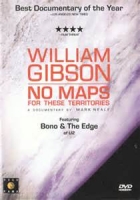
No Maps DVD coverAn independent documentary by Mark Neale, No Maps puts William Gibson in the back of a limo and provides an informal interview while riding around North America, Ireland, and the UK. Most of the content is Gibson's responses to unheard questions with the presentation coming off as a stream of consciousness.

Covering a range of topics, Gibson provides his views on culture, the current technology revolution, and his writing process. It's a rare and interesting opportunity to hear thoughts from a winner of both the Hugo and Nebula awards (both for his novel Neuromancer) and worth the time to enjoy.

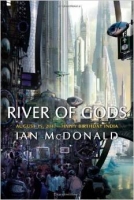
River of Gods


River of Gods coverIt's 2047, a hundred years after India gained independence from Britain, River of Gods is set in a country now broken into smaller nations. There hasn't been a monsoon season in years, resulting in a parched region with a Ganges trickling through Varanasi after being dammed upstream - a dam that has two nations on the edge of war.

The world is a different place in 2047. Genetic modification is everywhere, including superchildren and gender neutralizing body modifications. Artificial intelligence operates at different levels, some of them above the limits banned by international treaty. Otherwise, much of India is still poor, water is even more scarce, and the caste system carries on with only a few adjustments.

However, the Americans have found something deep in space. An object that causes a lot of questions and sends a specialist in search of her former lover. In India, someone else finds him first, someone with a strange past and who might not be completely human. Meanwhile, Mr. Nandha, one of the Krishna Cops, is hunting aeai's (artificial intelligence) with his team.

A winner of the British Science Fiction Association award and a nominee for both the Arthur C. Clarke Award and Hugo Award, River of Gods is a wild ride through a futuristic Indian culture. The complexity of the story, presenting normal human lives and emotions intertwined with decades of advancements, presents a believable backdrop against which events unfold.
Abundance: The Future Is Better Than You Think

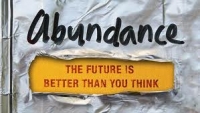
Book coverIn Abundance, Peter Diamandis and Steven Kotler present trends taking us towards a better future - one in which individual needs are met on a global scale. Using Maslow's Hierarchy of Needs as a foundation, they explore technology will find ways to improve efficiency by fostering cooperation, providing access to clean water, producing enough food for a planet of nine billion, and even enabling equality as limitations dissipate.

Many projections offer a future half empty. Here, we get a lesson on how our biases enable close tracking of negative trends, whether serious, global issues or personal issues threatening a comfortable ideal we would not wish to give up. Yet, data show the world is improving. As an example, Bill Gates' annual letter from this past January presents how effective support of poor economies is stabilizing population, improving health, and helping develop economies capable of supporting human rights and freedom.

The point of Abundance is that we can both thrive as a race, free of draconian measures to tame our needs, and solve our problems going forward, using new methods and technologies to empower humanity. Why settle for half empty or half full, when the future can be filled to the brim?

Social Physics

Social Physics book coverAccording to Wikipedia, Alex Pentland's areas of research include social physics, big data, and privacy. In his book, Social Physics, Pentland takes us through the benefits and issues, such as the loss of privacy, that come from comprehensive tracking. It's a short book with a deep look at how the Internet of Things and the quantified self will collect data to change the world around us and better our lives.

Focused on human behavior, the book offers a look at the range of benefits that could result from our hyperconnected world. These include idea flow to spread and advance new ideas, methods for bringing people into problem-solving scenarios to fast prototype solutions, and ways cities can take the density of its members, services, and infrastructure together to improve efficiency while providing the best living experience for the humans who call it home. At its heart, the work focuses on ways we can use data to find better methods for improving how we work together, but it also hints at the promise of an abundant future where mountains of data provide true insight to the best ways we can work together.

While that sounds promising, Pentland doesn't look at the world through rose colored glasses, but acknowledges how this data can and will impact our privacy. So he also proposes simple laws designed to allow the collection of data while protecting citizens from its inappropriate use (at least without our permission).

Social Physics is a course in a book by one of, if not THE expert in this field. Pentland offers a thorough and digestible look at the field and what it offers our future.

Robocop (2014)

Robocop posterA future of robots replacing military and police personnel is just a matter of time. The new Robocop, a remake of the 1987 cult classic, bases the need for a cyborg police officer after mass refusal of robotic policing of US citizenry. To put a human face on the next age of police service, detective Alex Murphy is used to operate a new body that makes him a cyborg supercop and his success will provide acceptance for OmniCorp to begin selling robots to police all over America.

As part of the Robocop system Alex influences, but doesn't always control, the police software or the body it operates. The film explores his posthumanity and the line where the human ends and the robot begins - or the other way around. Seen as the Future of American Justice, Alex/Robocop works through issues at a personal level while acting as the star of the Detroit police department and a pawn of OmniCorp's need for new contracts.

Her (2013)

Her - setting up the computerTheodore Twombly is an introvert going through divorce. After he purchases an operating system designed to be a virtual friend, Theodore become emotionally attached to 'Samantha' and enters into a romantic relationship with her. - her being the artificial intelligence in his computer. Her follows their relationship through the typical trials most human relationships go through, with the added issues of a virtual companion who attempts to satisfy their 'lover' through a variety of emotional and romantic experiences.

At its heart, Her is a relationship film set around two very different people, one made of code, attempting to find common ground. It explores the variety of their relationship from Theodore's viewpoint, though Samantha's growth and issues are also represented throughout the story. As the story unfolds and the relationship goes through its ups and downs, we get a sense of this new and fragile pairing.

Nominated for five Academy Awards, Her won best screenplay in addition to being nominated for best picture. With a laid back, futuristic setting and a story presented through conversation and emotion, Her isn't just science fiction, it's a brilliant look at a future where artificial intelligence, and also artificial emotion, impacts the individual.

I, Robot (2004)

I Robot movie posterBased on the Asimov short story collection of the same name, I, Robot explores a society where humanoid robots are everywhere, doing a range of jobs, through a detective who is distrustful of robots due to a tragic accident he survived, but others didn't. As a result, when a murder happens and a robot could be responsible, the detective has to overcome doubt that a robot, required to follow the Three Laws of Robotics, could kill a human.

Another action science fiction film based on Asimov's work, the film is set in a future with many many societal changes, yet still feels incomplete. The movie is almost too clean, another clean utopia containing devoid of nature (except the cat, gotta save the cat). Yet the benefit of that sanitized environment is the way the crime stands out. Everything looks so clean and feels so efficient, you have to wonder whether any crime happens at all. For that reason, the CGI worldbuilding works for the film, though I have to wonder if a future remake with grittier writing and scenes might offer a more believable setting.

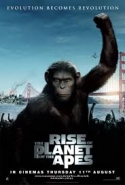
Rise of the Planet of the Apes (2011)

Rise of the Planet of the Apes posterThe original "Planet of the Apes" introduced us to a world where humans are secondary to our closest family species in the great apes. The film relaunch of "Planet of the Apes" set those events in our future. "Rise of the Planet of the Apes" explains why these species are uplifted to human-level intelligence and the resulting conflict when humans attempt to deal with "alien" emotions, attitudes, and actions.

The film focuses on the development of an uplifted chimpanzee named Caeser, who gains human-level (or greater) intelligence as a result of the pharmaceutical testing of a potential Alzheimer's cure on his pregnant mother. Raised by the scientist who developed the cure, the film presents Caeser's life from a newborn to his role as a leader of a group of uplifted animals.

The Gate (2011 short film)

Screen capture from The Gate The Gate is a short film depicting a horrific event where humans are modified via unlicensed pharmaceuticals. Using a governmental review of the event as the structure, flashing back to images of mutants and conflict with authorities, it presents how the events came about and who was effected. A brief glance at what could happen if current pharmaceutical practices continue as the ability to manufacture designer drugs become the norm.

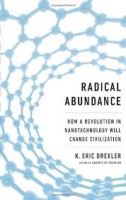
Radical Abundance: How a Revolution in Nanotechnology Will Change Civilization

Book coverEric Drexler introduced the world to nanotechnology in his first book, Engines of Creation: The Coming Era of Nanotechnology. In his newest book, Radical Abundance, Drexler presents a range of information, informing the reader of the process of nanoscale manufacturing, current efforts and research (and hurdles), and the benefits to science, society, and the planet once we achieve the reality of nanoscale fabrication.

Drexler presents APM (atomically-precise manufacturing) as the next revolution, the first three being agriculture, industrial, and information. This revolution will be powered once we control "the molecular machinery of life (using) proteins that can fit together to form motors, sensors, structural frameworks, and catalytic devices..." By using natural systems to construct from the atomic level towards larger and more complex products, we can manufacture efficiently, using common chemical substances in place of minerals and metals acquired through ecologically damaging mining, and to create materials we cannot visualize today.

In Drexler's future, APM solves many of the societal issues that create poverty, ecological disasters, and conflict. It's an important work that gives us a future to look forward to when so many visions are broken and dystopian.

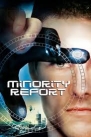
Minority Report (2002)

Film posterBased on "The Minority Report," a short story by Philip K. Dick, this film explores the issue of preventing crime before it occurs. The PreCrime division, a special unit set in Washington, D.C., uses three individuals who possess the ability to foresee murders before they occur. When each case is identified, including the victim, the perpetrator, and the time, the PreCrime police use recorded visuals from the "precog's" visions to identify the location and foil the crime before it happens.

While the division has had great success and is considered perfect, the film focuses on what happens if these visions are not 100% reliable. Especially when the perpetrators are arrested and imprisoned when they were not allowed to actually commit the crime.

Blade Runner (1982)

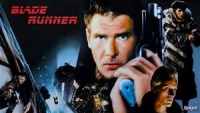
Considered one of cinema's most influential science fiction films, the Blade Runner screenplay was based on Philip K. Dick's novel Do Androids Dream of Electric Sheep? and directed by Ridley Scott, who also directed sci fi classics Alien and Prometheus. Blade Runner is set in our near future, 2019 is only 5 years away, against a dystopian backdrop of a filthy, crowded, culturally mixed cityscape on a planet where most humans appear to have left for other colonies. As with most classics that visualized technological and ecological hell on the other side of the year 2000, the vision is not accurate. Yet, it navigates issues we are discussing today because they will be here tomorrow.

The Island (2005)

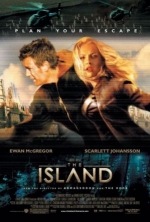
The Island dvd coverClones are big business in the future. Buy your own to supply the parts you require when sickness or injury threaten your life. The Island is a sci-fi action adventure set in the not-too-distant future, told from the viewpoint of two clones as they discover the truth of their existence and work to uncover corporate inhumanity.

Lincoln Six Echo and Jordan Two Delta are clones living in a safe, controlled world among others of their kind. History tells the outside world is too contaminated for life outside the compound, with only one remaining island clean enough to support human life. The clones live their routine hoping to one day win the lottery and move to the island, where they can live out their lives under the sun. But it's all a lie fabricated to keep them controlled and hopeful, two things necessary for the products, their bodies, to remain healthy.

Gravity (2013 film)

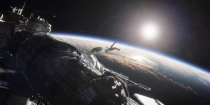
Gravity scene grabGravity is a highly detailed action thriller set in Earth's orbit. Starting with a what should be a routine Hubble Space Telescope repair, the mission ends as events threaten the shuttle and astronauts. The movie spins the lead characters, of which there are two, through a series of attempts to survive in orbit while seeking a way back to Earth.

Afterparty

Afterparty book coverSet in the near future, Afterparty explores a world where psychoactive drugs are printable. All you need is a chemjet printer and an Internet connection to begin printing designer drugs on paper, which is torn up and digested for each hit. The story follows Lyda Rose, one of the five founders of Little Sprout, a group trying to find a cure for schizophrenia, a condition from which Lyda's mother suffered.

The group is successful and Numinous is ready for trials when an event changes their lives. In high enough doses, Numinous permanently alters the user's perception by imprinting a bond with whatever god they believe in, often paired with hallucinations of a holy figure to watch over or even run their lives. Lyda believed the recipe was off the market, but then someone shows up in her ward who is clearly under its effect.

Angered by this, Lyda leaves care early with plans to find the source. With help from a few friends, not all of them real, she goes on a thrilling adventure across Canada and the United States in search of answers.

Splice (2009)

View of the spliced creatureAs genetic engineering progresses, humanity will be faced with issues of morality time and time again. Splice looks at the field of artificial life and the specific issue of combining human and non-human DNA. In the film, two researchers, facing the loss of their research, decide to combine human and animal DNA to create a new life form - just to prove it can be done. Once the birth occurs, each has a different response to the creature and those responses change over time as Dren develops towards adulthood.

The plot focuses on the different relationships Clive and Elsa have to the being they have birthed for science. Fearing their employer's response, they hide Dren and eventually mover her off site to protect her. Dren's development affects both scientists in different ways, with each responding to Dren and each other in different and sometimes horrific ways.


Love Minus Eighty

Love Minus Eighty book coverWelcome to the early 22nd century. Social media connects the elite in real time, and the digital divide has birthed a divide so complete it has manifested a near-complete physical disconnect. And while our mortality has not been conquered, reanimation has been perfected for those who can afford it. For those who can't, there is 'freezing insurance.' And for pretty, young women who can afford insurance, but not reanimation, there is a partial life in the 'bridesicle' dating service, where if you're pretty and willing enough, a one-percenter might marry you on your deathbed before taking you home as a bride-slave.

Will McIntosh's short story "Bridesicle" won both the Hugo Award and Asimov's Reader Poll in 2010, and was a finalist for the same year's Nebula Award. Love Minus Eighty is based on the short story and a brilliant dystopian look at a future that forecasts many of today's headline issues. McIntosh offers a very engaging world where the storyline shifts between High Town and the suburbs, contrasting the have's and have-not's of the world. Looking at the social changes, it feels like McIntosh did a good job of taking some of our current systems such as social media and incoming advancements such as life-expansion and autonomous systems forward in ways that are both promising and sour to current tastes.

The Martian

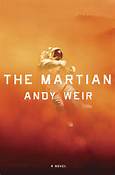
The Martian book coverA Martian storm forces Mark Watney's crew to end their mission just a few days into their 31 days on Mars. Separated from his crew, Watney is left behind to find ways to survive with slim hope of a rescue. An engaging novel from page one, The Martian provides detailed engineering and scientific realities as Watney, a botanist and engineer, overcomes a range of issues in his quest to survive as the lone occupant of the planet.

I'll make no bones about it, The Martian is the best novel I've read in years. Weir picks up right at the beginning of Watney's realization his crew has abandoned him, and keeps you on the edge of your seat. In addition to Watney's perspective, he includes the workings and politics of NASA, and presents a world where all of Earth is rooting for one of our own stranded alone. Weaving it all together offers the reader a roller coaster full of science and engineering that will teach as much as it entertains.

Song From a Forgotten Hill

Winter's Dreams book coverIn 1971, Glen Cook, an author known for his gritty fantasy novels, wrote the short story, "Song from a Forgotten Hill." Recently included in a short story collect, Winter's Dreams, "Song" is not your normal science fiction, though it is a dystopian view of a broken American landscape where the country has been through three "fires." The first is from Russian nuclear strikes on major American cities. The second is "when (black) militants burned remnants of Whiteys' cities." The third occurs when the US military's return from the war (presumably with Russia) leads to a civil contest "between whites and blacks."

In the anarchy following nuclear holocaust, Cook depicts the worst of humanity as sides are formed on American soil. Black militants strike at governmental infrastructure and then white rednecks turn back the hands of time to revisit the atrocity of slavery. In the midst of the aftermath, we find a a black protagonist, a veteran of the Vietnam war, attempting to keep his remaining family, "Four kids, the oldest fifteen, and no wife," safe and free in the wilderness: "The war killed most of the good folks. They lived where the bombs fell. The rednecks and the militants seem to be the only survivors. And now the rednecks, who had waited so long for their chance, are 'putting 'em back in their place.' There are very few of us out here in the hills. We're hunted, and running, but free."

The Machine - 2013 film

The Machine

A true sci-fi thriller, The Machine presents a future where artificial intelligence is closing in on human-level capabilities and governments race to develop human-like robotic soldiers. After a cold war with China has caused a severe economic depression in the West, research into artificial intelligence is viewed as THE research to win what is considered an unavoidable war. The desired outcome is a superior soldier capable of managing a "three-block war: the battle, the negotiations, and the peace."

While too many recent science fiction films have focused on famous actors and fast scenes, adding layers of action to cross genres, The Machine is a true sci-fi film (there is action, but most of the movie is slow and moody as developments take time). Both dark and gritty, it feels like a better view of the future than the ultra-political Elysium or any film dealing with human-alien strife. Swinging for the fence, Caradog James, writer and director of The Machine, bangs one out of the park.

The Silent Intelligence: The Internet of Things

The Silent Intelligence book coverThe term "Internet of Things" is thrown around a lot, even used in parallel with other terms describing the same thing for a specific area of focus. Even after reading a range of articles over the last few years, I felt my understanding remained a bit vague and decided to look for a resource with depth and breadth. Kellermeit and Obodovski's The Silent Intelligence: The Internet of Things comes highly rated on Amazon (4.5 stars) and seemed more informational than application-oriented books such as McEwen and Cassimally's Designing the Internet of Things, or Robert Scoble and Shel Israel's Age of Context: Mobile, Sensors, Data and the Future of Privacy - which I plan to read as well.

The Bourne Legacy

Bourne Legacy cover

Sometimes a great look at the future shows up in places you weren't looking. The Bourne Legacy, the sequel to the trilogy with Jeremy Renner (Hawkeye in the Avengers) taking the lead role, is a fast-paced look at posthumanism and one of the better futurist films I've watched in some time.

I'd mostly ignored Legacy, figuring it would eventually hit Netflix, but found it in the library on Blu-ray this week and picked it up. Finding some free time today, I started watching and was blown away as the back story came together piece by piece. Sometimes the best views of the future arrive in a medium other than science fiction.

Stop here if you don't want to read spoilers. But this is a great movie and worth checking out.

Future Babble

Future Babble coverWhy do we try to predict the future? According to Dan Gardner, it's because of our human need to protect ourselves that we are constantly attempting to recognize risk before the lions, tigers and bears descend upon us. In Future Babble: Why Expert Predictions are Next to Worthless and You Can Do Better, Gardner provides historical insights on the types of futurists able to make the most reliable predictions. Guess what? Those predictions don't come from experts in a field, they come from people with a wide range of knowledge looking at trends from different angles.

Ventus

Ventus book coverVentus is one of those scifi novels that strikes a great balance between plot, characters and new technologies - and a few old ones. One of my favorites and it's free on his website (or you can donate something for a novel that offers both education and entertainment with 4 stars on Amazon and 4.6 on Manybooks) if you're looking for something to occupy your weekend until winter finally sails away.

2030: A Day in the Life of Tomorrow's Kids

2030 book coverSo much energy goes into the future, both preparing for it and finding ways to retail it, but there aren't many good resources for the kids who will inherit it. 2030: A Day in the Life of Tomorrow's Kids is just that - a resource to help today's kids understand a bit of what their future might hold.

It's a nice resource and at only 30 pages long, it manages to cover a wide range of material, including clothing, communications, living space, careers, our populations, housing developments, transportation, recreation and education. The final page includes a nice list of books, reports and websites the reader can access for additional information.

Elysium (Film, 2013)

A look at the living area of ElysiumSet in 2154 (140 years from now), the wealthy have fled an ecologically devastated Earth for the space station Elysium where they live what appears to be a an idyllic life in a pseudo-suburban setting filled with clean air, beautiful vistas, and luxurious homes stocked with miracle health machines.

Extremis - Iron Man becomes posthuman

ExtremisWarren Ellis introduced the Extremis concept to Iron man in a 6-issue story arc starting in January 2005. This arc changed Tony Stark from a cyborg to a posthuman by introducing nanotechnology into his body and altering his physiology to include direct connections with the Iron Man suit. Ellis introduced many concepts and characters that were used in the Iron Man movie trilogy, especially Iron Man 3.

If you're into superhero comics, this is a short arc you don't want to miss. It's available on Marvel Unlimited or through Amazon. In typical comic-book style, it takes some complex scientific breakthroughs and turn them into a magical elixir, yet it brings many of the reasons we research posthuman adaptation into perspective given Stark's need to deal with the story villains. And there are a few great conversations in which characters wax philosophical about their Frankensteinian need to create a future that might be more monster than they would like.

Tomorrow Now: Envisioning the Next 50 Years

Tomorrow Now book coverBruce Sterling has written three non-fiction books. This is his second and was published in 2003. It's a multilayered work, with seven stages (chapters) based on William Shakespeare's As You Like It, in which Jaques's monologue outlines the seven ages of man as infant, schoolboy, lover, soldier, justice, and at the end of life. Through each stage, Sterling looks at current (at the time) research and runs it out 50 years, to the middle of our century, attempting to paint a picture of how our lives will change.

The Future of the Mind: The Scientific Quest to Understand, Enhance, and Empower the Mind

Dr. Kaku provides of his new book and how our understanding of the human mind will enable some amazing feats in the near future - including the ability to record  thoughts in rats and be able to play them back into the rat's brain so the thought is relearned by the animal.