Minority Report (2002)
 Printer-friendly version
- No explicit material
Director:
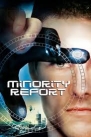 Based on "The Minority Report," a short story by Philip K. Dick, this film explores the issue of preventing crime before it occurs. The PreCrime division, a special unit set in Washington, D.C., uses three individuals who possess the ability to foresee murders before they occur. When each case is identified, including the victim, the perpetrator, and the time, the PreCrime police use recorded visuals from the "precog's" visions to identify the location and foil the crime before it happens.
While the division has had great success and is considered perfect, the film focuses on what happens if these visions are not 100% reliable. Especially when the perpetrators are arrested and imprisoned when they were not allowed to actually commit the crime.
Why you should watch it
Attempts to stop crime before it happens is the holy grail of police work. Stories of beat walking police with a feel for their area and a knowledge of the people combine with gumshoe detectives able to intuit motives from years of experience were the precursor for this ideal. As our cities grow, lives become more complex, and the crush of humans, and their emotions, expands, there are more incidents because there are more opportunities. Building a system able to place officers at the scene before someone is victimized would save everyone involved a great deal of trouble.
There are several ways this is happening today. Predictive policing (PredPol) is a method being used to identify crime events, track them, and use an algorithm to identify where and when they are likely to occur again.
The algorithm at play is performing what’s commonly referred to as predictive policing. Using years – and sometimes decades – worth of crime reports, the algorithm analyses the data to identify areas with high probabilities for certain types of crime, placing little red boxes on maps of the city that are streamed into patrol cars. “Burglars tend to be territorial, so once they find a neighborhood where they get good stuff, they come back again and again,” Romero says. “And that assists the algorithm in placing the boxes.”
The police are also using social media to prevent crime by watching "chatter" to identify planned events. The following is from chapter four of "Social Media and Tactical Considerations for Law Enforcement" by the U.S. Department of Justice:
Another area in which police departments can benefit from experience with social media is the handling of riots. Participants and bystanders often use social media to discuss the possibility of rioting in advance of an event, and they use social media during an incident to share information about what is happening. Police can obtain information about possible threats or other intelligence by paying attention to social media posts by members of the public.
While neither of these are much of an issue at this point and both are beneficial to protecting the citizenry, a better parallel to the film is the use of paid monitors to track school-age children for misconduct. This type of activity has a chilling effect on the development of young personalities and we end up with lists such as "12 Things Students Should Never Do on Social Media."
While some of this advice is excellent, such as not bullying, not posting confidential information, and checking in, you also end up with these:
Trash Your Teachers: Students who speak poorly of their teachers (or post embarrassing photos of them) run a huge risk, too. After all, your instructors have a right to privacy and respect.
Students also have the right to speak their minds, an aspect of free speech, and, as long as the details are not slanderous or threatening, should be able to share their viewpoints. Which brings up another:
Ignore School-Specific Policies: For example, one Catholic high school's student handbook reads, "When a student is using online social media (of any variety), she must always bear in mind that the material she posts reflects upon the school, our Diocese and the Roman Catholic Church as a whole." That means, posting your opinions about sensitive subjects like abortion, homosexuality, euthanasia, divorce or birth control, for example, could jeopardize your standing as a student.
While many types of content posted to social media are protected by free speech, your school may nonetheless find reason to use such opinions toward disciplinary action.
Once again, a chilling viewpoint when you know your thoughts and opinions are being tracked - not only by school officials who might catch wind of a statement, but also by a third party professional whose job is to report to your administration any viewpoint they might find objectionable.
When combined, we can certainly see an effort to root out issues before they happen and how the film (and short story) asks the question of how we might handle these situations. Saving a life by stopping school violence before it happens is a powerful use of a "precrime" style system. But, as I've asked before, do we use it to get the potential perpetrator help or use it to punish them even if it doesn't happen?
Topics covered
Futurists will enjoy the topics explored in the movie, including:
- The legality of arresting individual who have "broken on law"
- Personalized advertising (see video below)
- Gestural interfaces (see video below)
Personalized advertising scene
Gestural interfaces scene
Your overall rating:
Quality of the work (writing, art, photography, etc):
How believable?:
How original?:
Story tags (elements of how we live):
Location of story:
Years into the future:
 Interested in the social impact of our future advancements, Daryl developed and built Regarding Tomorrow as a platform to share and discuss our collective hopes and fears of the future. Daryl's background is in education, including graduate studies in special needs and a masters in instructional technology from UVA's Curry School of Education. He has worked as a high school teacher and has over 10 years of university experience in the US and Canada.