If you aren't familiar with Will McIntosh, he isn't surprised. Like many authors, Will is happy just to have a writing career and thankful for the opportunities his readers provide, even if his name isn't well known. But given the quality of his previous work and a new young adult science fiction series in development (The first novel, Burning Midnight, is scheduled for 2016), don't be surprised if you start hearing his name more often.
But you should know his short story "Bridesicle" won the Hugo Award for Best Short Story and also the Asimov's Reader Poll in 2010. It was also a finalist for the Nebula Award for Best Short Story that same year. His short version of "Soft Apocalypse" was a finalist in 2005 for both the British Science Fiction and British Fantasy Awards.
On the Future of Money Podcast, Heather Schlegel interviews Autumn Rooney, the founder of the Echo Park Time Bank. While I've heard of time swapping, time banks themselves are a new concept. In 42 minutes, they cover several interesting points on the topic, including:
@3:50 - How is the future changing? Ms. Rooney points out today's unsustainable methods and how they are bringing about tomorrow's changes.
@4:55 - An explanation of time banks and how time values are traded.
@15:20 - How do new users experience this service?
@23:20 - How time banks can mesh with the cash economy.
The Future of Money podcast hosted Johnny Dilley, the Venture Associate for Pantera Capital, to discuss where Bitcoin is today and where it might go in the future. Over 45 minutes, Johnny introduces several concepts on the digital currency technology.
A short film by Hasraf HaZ Dulull, I.R.I.S. is a military artificial intelligence with an expanded battle capacity plus strike autonomy. A short action film at heart, events unfold as the military sends in humans to attempt to regain control over the system. The script and scenes are not very informative, but do offer some nice visuals and a drone swarm I haven't seen used before.
In the short film Wanderer, Erik Wernquest pairs Carl Sagan's spoken thoughts with views of humans at various locations within our solar system. "For all its material advantages, the sedentary life has left us edgy, unfulfilled." Sagan himself reads these words and explains his view that our "everlasting itch for things remote" will push us beyond the limitations of our planet.
Magic Leap has pulled in half a billion in funding from names such as Google and is the brainchild of a medical robotics billionaire and a cofounder of Weta Workshops. Sean Hollister at Gizmodo provides a deep look into the history of the company and looks at their current work - including hands-on opportunities, patent information, and hiring practices – to see what they’ll be selling in the future.
It’s a lengthy article with several videos, some as long as 22 minutes. And that video is an excellent look at Magic Leap by Graeme Devine and worth the time to watch.
MIT professor Dava Newman presents the design and possible uses for a new spacesuit design. In addition to providing a history of space suit design and an overview of current designs, she elaborates on additional uses for the research such as better protective suits for healthcare workers and eventually exoskeletons to solve many of today's limitations for those without the ability to walk or maintain their posture for long periods of time.
Two minute video providing a view into the idea behind the "quantified self" movement and the benefits for humanity by collecting a massive database of health data.
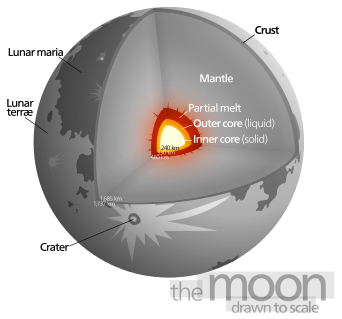
While there has only been a single trip to the moon involving humans, some groups view our only natural satellite as a hunk of resources waiting to be mined. In her article "Who owns the moon?" Dr Saskia Vermeylen provides an overview of the current laws and agreements governing moon property rights and how they might be handled based on current laws and treaties.
It may not be long until a new treaty needs to be discussed. Though current propulsion systems are not capable of bringing sufficient minerals back from the moon (or asteroids) to make the trip profitable, with current efforts focused on space tourism and transport, the need for more efficient methods to break free of Earth's gravity has never been more valuable. With intelligence and money being thrown at the problem, we should expect more efficient engines or alternatives within the next decade. There are many theories being researched that include space elevators, skyhooks, rail guns, and (safely) blasting it out of the atmosphere with lasers.
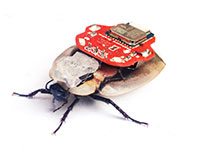
In an article on Huffington Post, Professor Lee Cronin offers some insight and asks some interesting questions about the future of cybernetic biology. He specifically focuses on developing an ability to control bacteria and plants in order to create a networkable ecosystem we could use to benefit society.
He also asks for ways such a technology could be misused. It's a brief, but compelling piece pointing out the benefits, concerns and even the issues of avoiding such research. Certainly worth reading to get some insight into an expert's view of this future and some of his points about how starting the conversation ahead of the ability can benefit researchers to increase technology safety before it arrives.