Children of three and four are able to manipulate a tablet screen, but "have little or no dexterity in their fingers" after hours of this activity and are not developing the dexterity to play with building blocks.
"...some older children were unable to complete traditional pen and paper exams because their memory had been eroded by overexposure to screen-based technology."
John Lennon was gunned down 34 years ago. If still alive, he would be 74 years old. In 2011, one of Lennon's former housekeepers sold one of Lennon's teeth at an auction in England. The winning bid belonged to Dr. Michael Zuk, a Canadian dentist. Zuk is making headlines this week by admitting plans to have Lennon cloned from DNA remaining in the tooth and raising the resulting child as his own. It brings up many questions, including the morality of cloning someone famous and who owns your DNA once you pass on.
Raw intelligence is a major factor in our individual level of success - some develop more and some develop less. Whether attempting to maximize your income, research a cure for cancer or win a sporting contest, the ability to take a range of information, internalize it, and turn it into effective decisions can heavily influence whether we encounter failure or success at each task. Human intelligence is the outcome of millions of years of evolution and access to opposable thumbs has provided the ability to make the tools we have used to conquer our world. While there are proposed methods for increasing our intelligence, some individuals are using different technologies and chemicals to increase their own.
Humans have issues with data. Data on its own is hard to turn into information, which we can understand much more easily. Weather data is a great example, as it is both a global and local phenomenon impacting almost every day of our lives. If my phone's weather app presented data, I would receive information about regional climates as far as the Arctic and Gulf of Mexico. It would be difficult for most anyone but a meteorologist (amateur or otherwise) to make an accurate prediction using this data.
Futurists often explain our potential consumption in the number of planets we would need if everyone lives like a Westerner with large homes, multiple cars, and a dependency on consumerism to drive the economy - the last count I read was six Earths. It's a fair assumption and a questionable habit. In fact, I believe teaching my daughter to control her consumerism will be a key asset in her future no matter where or how she lives.
As part of an ongoing series to introduce his new book, Dan Abelow introduces chapter 1.2 about the Age of Crisis, which he refers to as The Crisis of Success. He sums the crisis up very well in a single sentence:
Our growing Crisis of Success comes from who we are: Everyone wants it all, wants it now, and won’t stop.
I've been watching this video make the rounds for about two weeks. My first thought upon seeing it was, "How long before Madonna is on the phone with Kurzweil and Kaku to figure out when she can dump her brain into it and plan a new world tour?" Humorous, but hardly kind. Though I'm no fan of Madonna and believe she is narcissistic to the extreme, I also have to admit most of humanity is the same way. If we could push our minds into machines like these, how many of us would and how often?
As greater details of our lives can be tracked, data analysis can show trends in our behavior against the norm. When I view personal privacy, I ask three things:
Why does someone need to know my preferences and tendencies?
Can this data positively impact myself or my family?
Can this data negatively impact myself or my family?
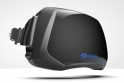
Facebook's purchase of Oculus for $2 billion is making headlines this week. While most writers in the techsphere are focused on the value of VR as the next gaming platform, Lauren Hockenson at GigaOM looks ahead to the next decade and three ways Facebook might attempt to use the hardware.
I love history, though I struggle to internalize it without context. I find it challenging to put all those dates and names and places together without a narrative or visual aid. Travelling Europe has helped, especially when I read topical history books before and during the trip, aware of past events and visiting the sites where they occurred. Not everyone can afford the expenses or time to travel, but advancements such as augmented reality may be ready to offer some help.
Augmented reality overlays computer generated images over realtime visuals. The field was limited for mobile use until smartphones with cameras were able to provide a realtime view for a graphical overlay. Phone screens are nice, but limited. Several technologies are coming together to provide data overlays to provide rich environments, including wearable glasses (Google Glass), interactive street views (Google Stretview), and metadata tying content to a space based on both GPS coordinates and date identification. Not the current date, but the time frame the media represents.
A short article from Popular Science reports how companies are using new technologies to track employee work habits and lifestyles in order to mold a better employee. Part of the age of new life tracking termed the 'quantified self', they reference three articles on the subject. Here is a list of what is being tracked:
Sleep Distance walked or run Diet Time spent sitting at their desk "Happiness" "Performance data" on how well employees communicate with each other and shoppers "Tone of voice, movement and even posture when communicating with others"








 A short article from Popular Science reports how companies are using new technologies to track employee work habits and lifestyles in order to mold a better employee. Part of the age of new life tracking termed the 'quantified self', they reference three articles on the subject. Here is a list of what is being tracked: