Communication

Magic Leap: A Virtual World In Our Reality

Magic Leap has pulled in half a billion in funding from names such as Google and is the brainchild of a medical robotics billionaire and a cofounder of Weta Workshops. Sean Hollister at Gizmodo provides a deep look into the history of the company and looks at their current work - including hands-on opportunities, patent information, and hiring practices – to see what they’ll be selling in the future.

It’s a lengthy article with several videos, some as long as 22 minutes. And that video is an excellent look at Magic Leap by Graeme Devine and worth the time to watch.

Grossout (nasty fun with 3D food printing)

Jello heart from FlickrEach printed meal offered four bites per player. When you were targeted, you had to eat two bites and hold it down for one whole minute and then eat the last two bites before another minute had passed. Some items were so nasty the minute made the player realize he never wanted to eat the stuff again and then couldn't wolf it down before the rest of the time ran out - even if they were willing to try!

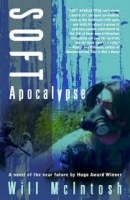
Soft Apocalypse

Soft Apocalypse book coverAs atmospheric carbon rises towards 450 units per million and the pitch of climatologists reach higher levels of alarm, Soft Apocalypse offers a worst-case scenario of what a slow collapse of society might look like from the inside. Where McIntosh's Bridesicle/Love Minus 80 revolved around a misuse of life-saving technology, Soft Apocalypse is an avalanche of Hell unleashed on our planet. It is futurehorror without a Freddy or Michael, where the bad guys numbered in billions around the globe. Many of them bad guys who live among us today, but who haven't been forced to show their true natures as long as the distractions of civilization keep them in check.

This story could easily be the world outside as everything unraveled in Cormac McCarthy's The Road. Watching the slow collapse of society through Jasper's narrative, we see humanity returning to its fierce roots as the veneer of civilization is slowly stripped away. Soft Apocalypse is a message you live through as you read it.

Do We Need Humans?

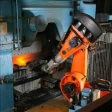
Robot workerThere is a lot of speculation on the technological singularity - the point at which artificial intelligence has progressed beyond human intelligence. Between AI and advanced engineering, humans could quickly become extraneous to modern society, especially from the viewpoint of those who own the robots and see extra humans as needful beings who return little to the planet.

That's a very dystopian view, but a possible outcome all the same. The February 28, 2014 episode of NPR's Ted Radio Hour offers four viewpoints on the future of humanity.

The Hyperloop is down...speculative fiction by Crave's Eric Mack

Eric Mack, from CNET's Crave, wrote a two piece story using today's news to speculate on what the futre might look like a decade or two from now. Worth a few minutes read to see what he thinks about a few things. Especially with humor like this:

With all my high-speed transport options out of commission for the day, I should be posting my own angry EEG GIF showing my brainwaves mashed up with some vintage footage from an old Dwayne Johnston flick, back before he was elected, before his groundbreaking presidency united the American and Canadian states (largely to allow for American drone fleets to better protect Arctic borders from polar pirates) and led to the annexation of Mexico, back when -- for some reason -- everyone simply called him "The Rock."

Part 1: The Hyperloop is down and I'm late for work
and part 2: Smart wig on and lightsaber packed, I visit the future.

Enjoy.

No Maps For These Territories

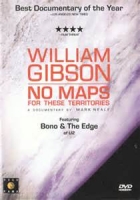
No Maps DVD coverAn independent documentary by Mark Neale, No Maps puts William Gibson in the back of a limo and provides an informal interview while riding around North America, Ireland, and the UK. Most of the content is Gibson's responses to unheard questions with the presentation coming off as a stream of consciousness.

Covering a range of topics, Gibson provides his views on culture, the current technology revolution, and his writing process. It's a rare and interesting opportunity to hear thoughts from a winner of both the Hugo and Nebula awards (both for his novel Neuromancer) and worth the time to enjoy.

River of Gods


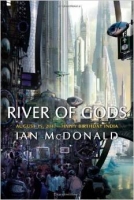
River of Gods coverIt's 2047, a hundred years after India gained independence from Britain, River of Gods is set in a country now broken into smaller nations. There hasn't been a monsoon season in years, resulting in a parched region with a Ganges trickling through Varanasi after being dammed upstream - a dam that has two nations on the edge of war.

The world is a different place in 2047. Genetic modification is everywhere, including superchildren and gender neutralizing body modifications. Artificial intelligence operates at different levels, some of them above the limits banned by international treaty. Otherwise, much of India is still poor, water is even more scarce, and the caste system carries on with only a few adjustments.

However, the Americans have found something deep in space. An object that causes a lot of questions and sends a specialist in search of her former lover. In India, someone else finds him first, someone with a strange past and who might not be completely human. Meanwhile, Mr. Nandha, one of the Krishna Cops, is hunting aeai's (artificial intelligence) with his team.

A winner of the British Science Fiction Association award and a nominee for both the Arthur C. Clarke Award and Hugo Award, River of Gods is a wild ride through a futuristic Indian culture. The complexity of the story, presenting normal human lives and emotions intertwined with decades of advancements, presents a believable backdrop against which events unfold.

Abundance: The Future Is Better Than You Think

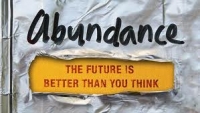
Book coverIn Abundance, Peter Diamandis and Steven Kotler present trends taking us towards a better future - one in which individual needs are met on a global scale. Using Maslow's Hierarchy of Needs as a foundation, they explore technology will find ways to improve efficiency by fostering cooperation, providing access to clean water, producing enough food for a planet of nine billion, and even enabling equality as limitations dissipate.

Many projections offer a future half empty. Here, we get a lesson on how our biases enable close tracking of negative trends, whether serious, global issues or personal issues threatening a comfortable ideal we would not wish to give up. Yet, data show the world is improving. As an example, Bill Gates' annual letter from this past January presents how effective support of poor economies is stabilizing population, improving health, and helping develop economies capable of supporting human rights and freedom.

The point of Abundance is that we can both thrive as a race, free of draconian measures to tame our needs, and solve our problems going forward, using new methods and technologies to empower humanity. Why settle for half empty or half full, when the future can be filled to the brim?

Pages