Communication

Science fiction is the new R&D

When I imagined Regarding Tomorrow as a social site, part of it was crowdsourcing member ideas to build towards greater accuracy of what the future might hold - specifically how new advancements might impact our cultures. Always on the lookout for information helping me to better understand what the site needs to offer, I ran across three tweets today, all very close to one another, that struck a chord as I consider my first major site refresh.

The first was from Ali Madad:

As we add more automation to our lives, will it hurt those around us?

Kid texting while walkingEvan Selinger at Wired gives us an interesting look at how the automated communication in our world can go too far and separate us from the value of an act, instead turning it into a regular switch thrown by a perfectly timed computer system. In his words -

We’re observing the emergence of tech that doesn’t just augment our intellect and lives — but is now beginning to automate and outsource our humanity.

Where will technology and big data take our future?

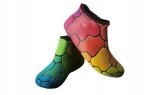
Stratasys 3d printed shoes

Technology is slowly infiltrating every area of our human existence. I read Alistair Croll's Race Alongside the Machine today on re/code and it led me to a reflection on how we humans are being changed by the technology we develop and where this might lead in the future.

When I came up with the original idea for a future-focused site, I immediately created a short list I called "aspects of human existence." I've changed them to "elements of how we live" and use them as story tags, a taxonomy vocabulary in Drupal terms, in order to help users find content. After reading Croll's piece, I decided today's exercise would be to look at the (now much longer) list and see what I can come up with for where current trends and predictions will take us as we continue to combine humans, technology and big data.

What will it take for you to get a data chip embedded in your body?

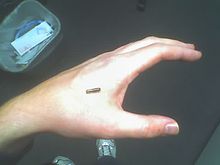
RFID chipData chip implants
What it is - Implants embedded in our bodies. They allow us to access current services such as GPS and RFID. In the future, they can be used to store medical device and other data, connect with cellphone systems and even connect with friends as a form of artificial telepathy.

Extremis - Iron Man becomes posthuman

ExtremisWarren Ellis introduced the Extremis concept to Iron man in a 6-issue story arc starting in January 2005. This arc changed Tony Stark from a cyborg to a posthuman by introducing nanotechnology into his body and altering his physiology to include direct connections with the Iron Man suit. Ellis introduced many concepts and characters that were used in the Iron Man movie trilogy, especially Iron Man 3.

If you're into superhero comics, this is a short arc you don't want to miss. It's available on Marvel Unlimited or through Amazon. In typical comic-book style, it takes some complex scientific breakthroughs and turn them into a magical elixir, yet it brings many of the reasons we research posthuman adaptation into perspective given Stark's need to deal with the story villains. And there are a few great conversations in which characters wax philosophical about their Frankensteinian need to create a future that might be more monster than they would like.


Owning a mobile phone makes you intimately trackable

Dear subscriber, you are registered as a participant in a mass disturbance.

This was the content of a text message received by cell phone carrying protestors in Kiev by the Ukranian government. Using mobile technologies, the government was able to identify all of the phones in certain areas and target them with this warning. It's a message that lets the carrier of the phone know they, or the phone owner, has been identified by private records as participating in the protests - or at least being in the vicinity.

RoboEarth: a learning community for robots?

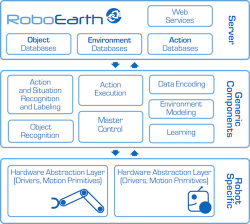
RoboEarth layers of services diagramRoboEarth is a project designed to network robots so each can add and pull information from a central repository. By sharing their "experiences", the robots can learn more quickly and access content to help them adapt to each process. The company's website provides this explanation of the online system:

"The RoboEarth Cloud Engine (also called Rapyuta) makes powerful computation available to robots. It allows robots to offload their heavy computation to secure computing environments in the cloud with minimal configuration. The Cloud Engine’s computing environments provide high bandwidth access to the RoboEarth knowledge repository enabling robots to benefit from the experience of other robots."

The future of privacy: the necessary data or a march towards a future of corporatocracy?

Prism logoThe combination of governmental and corporate data tracking are enabling outside entities to track increasingly granular details about our lives and interactions. Most of the reasons offer positives and are focused on protecting citizens or providing services we find useful. In order to do these jobs more efficiently, inroads to more data are critical in order to query across enough channels to create accurate connections such as identifying a terrorist organization's leader or helping us make certain we get enough exercise per day.

Pages