Where will technology and big data take our future?
 Printer-friendly version
Technology is slowly infiltrating every area of our human existence. I read Alistair Croll's Race Alongside the Machine today on re/code and it led me to a reflection on how we humans are being changed by the technology we develop and where this might lead in the future.
When I came up with the original idea for a future-focused site, I immediately created a short list I called "aspects of human existence." I've changed them to "elements of how we live" and use them as story tags, a taxonomy vocabulary in Drupal terms, in order to help users find content. After reading Croll's piece, I decided today's exercise would be to look at the (now much longer) list and see what I can come up with for where current trends and predictions will take us as we continue to combine humans, technology and big data.
Art (music, drama, literature, illustration)
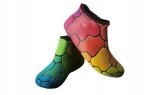
- 3D printing brings unique to every day objects. Every user on the planet has the ability to synthesize their own look and surroundings in ever increasing scale. Originality may remain the field of artists, but cookie cutter companies will need to create a better mousetrap to retail some products.
- As the world grows smaller and more connected, every artist has greater reach and opportunity to influence the world. Less silos of content and more connected nodes creating channels to fit every taste.
- Artists will be challenged as big data hacks the creative process and puts the skills in newbie hands with less and less training needed. True artists will remain on the front line, looking for what doesn't exist and showing what we couldn't see on our own, though the ideas that don't exist will be harder to find.
Artificial life (Robots)
- Mechanical systems become more detailed and real until we can begin to anthropomorphize elements of our world normally only found in fantasy and children's books.
- As the technology miniaturizes and adapts to an endless range of forms, the data we can secure from our world will become ever more detailed. Robots in every location can be fitted with every type of sensor until smog can be seen flowing across the terrain as node by node registers thicker air crossing a city or flowing out over the suburbs.
Beauty (attraction)
- Genetic manipulation will increase our need for perfection, tweaking away bent noses, big ears, baldness and freckles on demand.
- Big data will discover subconscious triggers and technologies will provide the ability to morph to near perfect standards in real time - humans shopping for mates will be able to add subtle (or not so subtle) changes to their clothes, bodies, hair, makeup and even identify topics for discussion, sexual triggers and best ways to engage based on social data about someone who enters the room.
- Synthetic life becomes so real our human flaws will need to be added and randomized as the last effort to cross the uncanny valley - true perfection will either be too unreal to accept or will have too profound an effect on our egos.
Commerce (trade)
- Big data harvesters continue to find nearly perfect combinations of product and marketing to trigger impulse buying or sway interest over time - it won't just be about the amount of advertising (we'll become numb), but the depth of impact. Media will be written preparing us for the onslaught of individualized and accurate advertising and how we can protect ourselves and our wallets.
- Retail struggles to bring in enough bodies to keep the lights on. Business property prices drop in response as boutique shops and faux-mom and pop stores find unique ways to brand themselves to as many niches as they can, but no longer focused on every taste.
 Handmade objects like those on Etsy continue to sell as people find ways to escape the plastic consumer sphere.
- Social response to items will carry more intimacy to other buyers than constant advertising. Social points can be earned for positive reviews on your social feeds based on reach and impact. Individuals will become marketing agencies simply based on their tastes and ability to communicate to the public.
Communication
- The world gets smaller as humans are able to project themselves into other locations using telepresence and immersive technologies. Travel, business meetings and sex over wires become easier until artificial methods are good enough even if they aren't identical to the real thing.
Conflict (combat)
- As with communication, advanced countries are able to put soldiers into the field using robots as a proxy. The ability to engage a human enemy puts them at such a logistical disadvantage that the nuclear option becomes ever more important for smaller nations to remain free from first world influence.
- As with current poaching drones, robots of all shapes and sizes will be used to create no-conflict zones using a variety of non-lethal weaponry to render combatants immobile and/or unconscious until it is safe for them to be collected.
Copulation (sex)
- A genetic or hormonal switch will be discovered that turns off the ability to procreate (until you switch it back) - complicating issues between technology and religious conservatives.
- Sex with interactive and highly realistic machines will become affordable for the middle class - complicating issues between technology and religious conservatives.
Diet (food preparation and preservation)
- Ingredient lists will be embedded via RFID. Wearables will identify what is being consumed and be able to track calories, cholesterol, sugar consumption, etc...
- Able to track eating habits over time, machine intelligence will help us identify issues causing everything from intestinal discomfort to sleeplessness to acne and identify which ingredients to avoid.
- Raising your own food at home goes from niche to mainstream as new technologies simplify the process.
- 3D printed food provides layered foodstuffs that change flavor through the dish.
Education (learning)
- Interactive hardware and gamified learning creates a self-leading learning process. Schools are able to adapt from 19th century structures and practices to teachers acting as facilitators and tutors in realspace.
- Technologies will identify a students physical and emotional state. Lessons, play time and counseling will be available to students who are unable to focus through lessons.
- Schools will become learning spaces where students will be able to choose their next assignment topic and type of engagement, learning to identify the learning and social engagement they need at that moment.
- Lesson flexibility will create a system where students encounter less stress and less discipline will be necessary.
- Communication systems will allow students, teachers and administrators to connect with parental figures (parents, grandparents, aunts, uncles, etc...) in realtime to deal with issues of discipline.
- Parents will receive regular updates on their child's performance through a system that clearly identifies current strengths, weaknesses and trends.
Energy management (energy creation)
- Disruptive startups challenge existing infrastructure to create ever more efficient buildings and hardware, maintaining or decreasing overall energy needs.
- Energy creation becomes more localized with homes able to generate enough energy through solar roof panels that low-energy use times are covered.
- Energy costs rise per megawatt as electric companies shift towards providing consistent energy during peak times for homes and industry.
Faith (belief)
- Religious groups run into issue their writings do not cover and begin to splinter over technological influence, with more conservative groups refusing new technologies.
- A strong Ludditic movement develops in which groups beging to refuse technology of all forms.
- New religions develop in response to new social technologies. Niche at first (Scientology being a good example), growth is based on resources and marketing.
Flora and Fauna (living nature)
- Robotics and machine intelligence reach a level capable of monitoring and even defending species and entire ecosystems from invasive species and poachers.
- Increased abilty to monitor ecosystems show collapse in realtime. As major ecosystems begin to collapse in measurable ways, a mainstream movement to protect them becomes strong enough to push back on corporate interests.
- For those ecosystems where it is too late, ecosystem transplanting will take place.
- Extinct and nearly extinct species will be recreated from collected genetic material.
- (These are mostly wishful thinking, but we have to hope).
Government (representation)
- Social feeds, journalistic articles and government documents will enable data mining on individual representatives. Bribes contributions will become more difficult to hide.
- Government petition site numbers will be connected with actual governmental change and voting patterns of elected officials will be presented - this will show how often an official represents their constituency and will make it more difficult for special interests to directly influence the process.
- Special interest monies will be spent on influencing both representatives and the masses - multi-tiered corruption will be the new norm.
Habitation (dwelling)
- Homes are built using 3D technologies.
- Intelligent systems are able to sense temperature and humidity throughout the home, adjusting based on outside temperatures, time of day, sunlight, and user location.
- Smart lighting develops to illuminate personal space and to learn preferences, reducing overall home energy needs.
- Kitchens begin to offer space-conserving appliances capable of using bood basics to create more complex dishes refined to user tastes. The need for premade foods drops as freezers and pantries are stocked with basics able to be measured out per recipe.
Human form (adaptation)
- Genetic modification becomes the norm for children, using techniques to delete genes causing some forms of disorders before birth.
- Gene switching is used to reduce illness and sensitivity to foreign substances. The same procedures are used to increase immune response, oxygen capacity and strength.
- Sensory implants become the norm for the aging and injured.
- Implants are used to expand human memory, connectivity, sensory input and agility. Humans are able to recall, communicate, feel, smell, see into different light spectrums, and move with greater efficiency to reduce injury.
Interface (tech control)
- Interface becomes its own intelligence and acts as a connection between humans and their surrounding technology. Interface is the first real intelligence, designed as a pseudo-psychological software with the purpose of reading a specific individual and providing limited communication to other interface systems. Once an interface is learned, it fades into the background.
- Interface attacks (virus) change an individual's ability to interact with their surroundings or poison their input.
- Interface merges with artificial memory and becomes a hot topic on discoverable evidence for trials.
Medicine (health)
- Wearables and personal technologies consistently monitor health and report concerning trends.
- Robotic intelligence takes over monitoring of surgery and treatment, identifying health data more consistently and perfectly than humans. Doctors and surgeons remain critical to outlier data that has not yet been built into machine systems.
- Custom medicines become the norm and can be printed at home.
Posthumanity (cyborg)
- Cybernetics begin by helping individuals overcome limitations from disabilities by returning mobility, function and even sensory input.
- Military use increases awareness, strength, stamina and helps monitor realtime emotional and physical health of soldiers.
- Widespread adoption of cybernetic abilities focus on creating superhuman abilities for employees. Systems would help minimize physical and mental fatigue, while adding awareness of the process and provide just in time training.
- Criminal organizations use posthumans to target victims.
Recreation (play)
- Embedded communication channels add a different level of strategy to team games.
- Non-profits (and maybe some for-profits) gamify real world issues, letting teams recruit the best minds for the problem. Teams are paid out (with whatever is offered) for each milestone identified as moving research towards a final solution.
- Games develop to respond to player physical, mental and emotional states. Game design includes the ability to challenge morality and intelligence without disconnecting the player from gameplay. Biorhythm awareness can help keep players heart rate at appropriate exercise levels and to identify when the player is truly engaged.
- Games incorporate real-world elements such as mental tasks which must be completed before moving on - paying a bill, calling someone, responding to an email.
- Fiction and life merge with media elements being introduced to reality. Someone reading a mystery novel may need to avoid an illusory stalker on the way home. A series watcher may need to rush to a place and deactivate an illusory bomb in order to watch the next episode. Someone playing a game may need to take their phone to a specific GPS location to receive a call with an "anonymous" hint to solve a crime.
Relationships (matrimony)
- Artificial sex products (NSFW), whether robotic of synthetic life, will challenge existing relationship types and create new types.
- Marriage becomes a quantifiable asset, with systems able to identify success probability and positive impact on each member.
- Social services will mine social data to organically create interesting offerings in the best locations and invite interested parties, matching their ability to attend based on calendar data.
- Social media will develop a Netflix-style recommendation engine for friends.
Synthetic life (biocreation)
- Lifeforms are created to deliver medicine using bacterial and viral replication and mobility as a template.
- Custom pets with genetic tweaks to make them easier to own and increase lifespan.
- Creating new forms of life, able to help maintain ecosystem health, provide food alternatives,
- Dumb "humans" made from non-human DNA - humanoids with dog level intelligence that look like supermodels - will create an entirely new view of sex slavery when these creatures are made for sale.
- Custom life structures designed to pair with technologies create creatures with limited intelligence. Patterns for work skills can be inserted into their memories to create custom and very adaptable workers.
Travel (locomotion)
- Semi-autonomous vehicles offer fatigue avoiding technologies and driver-safe diversions.
- The automobile goes online and become a mobile communication portal.
- Autonomous vehicles enter mainstream use.
- The percentage of autonomous vehicles on the road reach majority and human awareness becomes less necessary.
- Car-sharing networks become a norm for individuals living in areas where they offer consistently fast response.
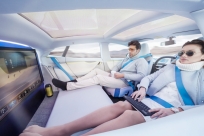 For individuals who continue to own a car, they become mobile living rooms and offices where all communication channels are online at all times.
- Airports become capable of identifying an individual when they exit their car (and already had an idea of who was in the car based on license plate, wireless identification or pre-arrival notification.
- Machine awareness for chemicals and illegal content cut down on security needs.
- Public transportation, cars and airports merge into organic systems.
Vocation (occupation)
- Individual worker impact becomes the measurable pay factor in place of hours worked for many labor types.
- Granular work details are able to view an employees contribution with relative accuracy.
- As robotics and machine intelligence take over programmable and repetitive work, unemployment will rise. In response, the number of work hours per week will decrease, forcing employers will to hire more workers.
- The remaining cheap labor and specialized work (with high salaries) will continue long hours. Cheap labor will earn higher wages vs the average, but have less free time - which will be considered a true entry to middle class.
- Customizable roles will develop, where a worker can arrange to change or trade roles to alleviate boredom and dissatisfaction.
Weather (the elements)
- Clouds will be harvested for moisture. As this this becomes widespread in drier regions, for nations who receive clouds after they have been harvested, water will become more scarce. Countries far from large bodies of water may encounter greater water insecurity resulting in wars and greater ecosystem destruction.
Took more time than I expected, but it was fun and a great learning opportunity. Nothing like expanding your mind. Feel free to add or critique below, feedback is always welcome for my own growth.
 Interested in the social impact of our future advancements, Daryl developed and built Regarding Tomorrow as a platform to share and discuss our collective hopes and fears of the future. Daryl's background is in education, including graduate studies in special needs and a masters in instructional technology from UVA's Curry School of Education. He has worked as a high school teacher and has over 10 years of university experience in the US and Canada.
Explicit:
Aspects of human existence:
- Art (music, drama, literature, illustration)
- Artificial life (Robots)
- Beauty (attraction)
- Commerce (trade)
- Communication
- Conflict (combat)
- Copulation (sex)
- Diet (food preparation and preservation)
- Education (learning)
- Energy management (energy creation)
- Faith (belief)
- Flora and Fauna (living nature)
- Government (representation)
- Habitation (dwelling)
- Human form (adaptation)
- Interface (tech control)
- Medicine (health)
- Posthumanity (cyborg)
- Recreation (play)
- Relationships (matrimony)
- Synthetic life (biocreation)
- Travel (locomotion)
- Vocation (occupation)
- Weather (the elements)