What will it take for you to get a data chip embedded in your body?
 Printer-friendly version
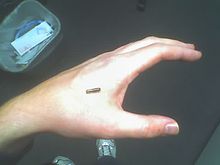 Data chip implants
What it is - Implants embedded in our bodies. They allow us to access current services such as GPS and RFID. In the future, they can be used to store medical device and other data, connect with cellphone systems and even connect with friends as a form of artificial telepathy.
 Where you've seen it - The Robert Longo/Keanu Reaves film Johnny Mnemonic portrayed a courier using a wet-wired drive to store data in his brain.
My likely scenario - This technology is coming and almost here. We already have hackers using it to store files on their person. Who will use them and why are the two biggest questions as governmental and corporate use of this technology will go as far as the law allows. With breakthroughs such as nanoribbon electrical generation able to provide ample power to these devices, it really will come down to where the law draws the line both from what each government will require and what they will allow citizens to have done to themselves.
I believe the capabilities of these technologies will be able to mimic nearly everything our current smartphones are able to do. Given the disruption water in our bodies cause for radio signals, there may be a distance limitation. But that can be resolved with more communication nodes or more sensitive nodes.
Anything able to actively send and receive data can be misued. With pacemakers and other medical devices found to be vulnerable to outside control, we'll also want to make certain these devices aren't able to control our internal processes or we may leave ourselves victims of viruses we normally find on our computers. While that may seem an unlikely scenario, we really don't know how safe all of these devices will be. In America, the FDA oversees medical devices or personal protective equipment. But if a device focused on communication or data storage, does it then move to oversight by the FCC?
If a company comes out with a product that claims to be 100% safe and passes FDA screening, will you have a chip embedded in your body if it allows you to replace your phone and is powered your body?
----------
This topic is from an article by the Reilly center, who offered 10 issues "for scientists, policy makers, journalists, and lay people to consider' as technological advances change our lives. It's a great opportunity for everyone to do just that, consider where we, as individuals - voting and purchasing individuals, stand on these issues. Here are my first thoughts on each with a plan for deeper consideration in future articles.
I am not including the full content of their article. You should read it for their viewpoints and additional resources.
 Interested in the social impact of our future advancements, Daryl developed and built Regarding Tomorrow as a platform to share and discuss our collective hopes and fears of the future. Daryl's background is in education, including graduate studies in special needs and a masters in instructional technology from UVA's Curry School of Education. He has worked as a high school teacher and has over 10 years of university experience in the US and Canada.