In Earth's solar system

Wanderers: a short film presenting humanity's expansion into the Solar System

In the short film Wanderer, Erik Wernquest pairs Carl Sagan's spoken thoughts with views of humans at various locations within our solar system. "For all its material advantages, the sedentary life has left us edgy, unfulfilled." Sagan himself reads these words and explains his view that our "everlasting itch for things remote" will push us beyond the limitations of our planet.

Building a better space suit

MIT professor Dava Newman presents the design and possible uses for a new spacesuit design. In addition to providing a history of space suit design and an overview of current designs, she elaborates on additional uses for the research such as better protective suits for healthcare workers and eventually exoskeletons to solve many of today's limitations for those without the ability to walk or maintain their posture for long periods of time.

Who owns the moon?

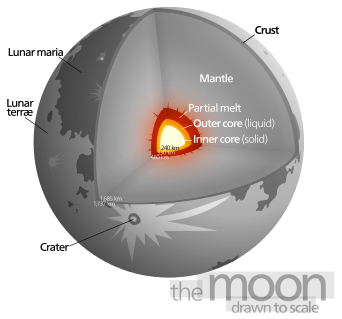
Interior view of the moonWhile there has only been a single trip to the moon involving humans, some groups view our only natural satellite as a hunk of resources waiting to be mined. In her article "Who owns the moon?" Dr Saskia Vermeylen provides an overview of the current laws and agreements governing moon property rights and how they might be handled based on current laws and treaties.

It's important to note there is another preceding treaty currently signed and ratified by a majority of nations. The 1967 "Treaty on Principles Governing the Activities of States in the Exploration and Use of Outer Space, including the Moon and Other Celestial Bodies" was designed to exclude using the moon as a base for weapons and also to limit national appropriation of moon property.

It may not be long until a new treaty needs to be discussed. Though current propulsion systems are not capable of bringing sufficient minerals back from the moon (or asteroids) to make the trip profitable, with current efforts focused on space tourism and transport, the need for more efficient methods to break free of Earth's gravity has never been more valuable. With intelligence and money being thrown at the problem, we should expect more efficient engines or alternatives within the next decade. There are many theories being researched that include space elevators, skyhooks, rail guns, and (safely) blasting it out of the atmosphere with lasers.

River of Gods


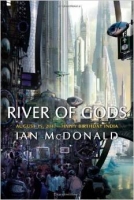
River of Gods coverIt's 2047, a hundred years after India gained independence from Britain, River of Gods is set in a country now broken into smaller nations. There hasn't been a monsoon season in years, resulting in a parched region with a Ganges trickling through Varanasi after being dammed upstream - a dam that has two nations on the edge of war.

The world is a different place in 2047. Genetic modification is everywhere, including superchildren and gender neutralizing body modifications. Artificial intelligence operates at different levels, some of them above the limits banned by international treaty. Otherwise, much of India is still poor, water is even more scarce, and the caste system carries on with only a few adjustments.

However, the Americans have found something deep in space. An object that causes a lot of questions and sends a specialist in search of her former lover. In India, someone else finds him first, someone with a strange past and who might not be completely human. Meanwhile, Mr. Nandha, one of the Krishna Cops, is hunting aeai's (artificial intelligence) with his team.

A winner of the British Science Fiction Association award and a nominee for both the Arthur C. Clarke Award and Hugo Award, River of Gods is a wild ride through a futuristic Indian culture. The complexity of the story, presenting normal human lives and emotions intertwined with decades of advancements, presents a believable backdrop against which events unfold.

The Martian

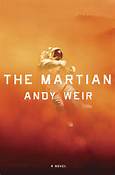
The Martian book coverA Martian storm forces Mark Watney's crew to end their mission just a few days into their 31 days on Mars. Separated from his crew, Watney is left behind to find ways to survive with slim hope of a rescue. An engaging novel from page one, The Martian provides detailed engineering and scientific realities as Watney, a botanist and engineer, overcomes a range of issues in his quest to survive as the lone occupant of the planet.

I'll make no bones about it, The Martian is the best novel I've read in years. Weir picks up right at the beginning of Watney's realization his crew has abandoned him, and keeps you on the edge of your seat. In addition to Watney's perspective, he includes the workings and politics of NASA, and presents a world where all of Earth is rooting for one of our own stranded alone. Weaving it all together offers the reader a roller coaster full of science and engineering that will teach as much as it entertains.

Filtering falsehood in the future

Liar card from eCardsThis past week, Facebook launched the FB Newswire, "...a resource for journalists that aggregates newsworthy social content shared publicly on Facebook by individuals and organizations." The service offers some hope that information shared through social media can become a bit more trustworthy, helping to clean up some of the misinformation and lies easily shared in an age where every person with a data line can publish content with very few restrictions.

It's an important development when the largest network in history adds a feature with this much potential impact. One of the reasons we value social media is the ability to get updates as soon as content is posted. Facebook provides sharing among acquaintances, friends, and family members while Twitter provides a near endless churn of news from any and every account and hashtag you follow. If news happens, whether the news is personal or global, we can know about it within hours, minutes, and even seconds of its posting. Sadly, the strength of social media is also a weakness when misinformation or outright lies are shared at the same speed. As Winston Churchill said...

A lie gets halfway around the world before the truth has a chance to get its pants on.

Futurepath: human food sources and preparation

Diet pyramidFood is one of our most basic needs, yet it represents culture, history, and individuality through our choices. Furthering our individuality, each person has medical and gastronomical limitations that add another layer of complexity to how we select what we eat. As such, it is a multilayered issue when you look at the future of food and how we might raise and prepare our food, with perhaps consumption being the only practice set in stone (unless they find a way for us to inhale our food, which doesn't sound very interesting to me).

In this futurepath, we'll look at the history of the human diet, current research on eating practices, and current food issues in order to identify how our food culture might change in the future.

Will social media splinter (us)?

Social media appsMathew Brian Beck offers a look into the future of social media and forecasts new forms of digital tribalism. About this, he says,

"Every platform will be socialized, but every user base will be judged on quality of life, not sheer numbers. Big data will not matter as much as small relationships."

His is an interesting idea about how social media will change our relationships and our choices will reflect our interests and lifestyles. As social creatures, we have circles of relationships in which we are members and which in turn influence our lives.

Protect your DNA

A young John LennonJohn Lennon was gunned down 34 years ago. If still alive, he would be 74 years old. In 2011, one of Lennon's former housekeepers sold one of Lennon's teeth at an auction in England. The winning bid belonged to Dr. Michael Zuk, a Canadian dentist. Zuk is making headlines this week by admitting plans to have Lennon cloned from DNA remaining in the tooth and raising the resulting child as his own. It brings up many questions, including the morality of cloning someone famous and who owns your DNA once you pass on.

Pages