Futurepath: 3D printing
 Printer-friendly version
Updated 8-7-14 with new content
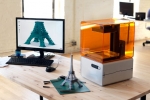 If you pay any attention to the tech world, you realize 3D printing, also called additive manufacturing, is the next big thing as dozens of startups are racing to get their product to market ahead of the competition. Everything from toys to guns, shoes to pizza - there are printers being developed to print anything we buy.
How does it work?
At the most basic level, this is the process, after a printer is acquired:
- Just like the printer on your desk, the process starts with a file. The file contains the information for the printed object, including ingredients, colors and textures.
- These tell the printer which any parts of the object are made from plastic, rubber, metal or ceramic (or carbohydrates, proteins or spices); what colors should be injected (or which pre-colored ingredients should be used); and whether an ingredient should remain soft or cure to a certain hardness.
- The file is fed into the printer, which starts printing material on the floor of the machine, laying down rows of whatever material is being used for production and adding layers upwards and/or outwards. The printer works on all three axes (X, Y and Z) to construct the object.
- Once the model completes printing, the user removes it from the printer and can make any additional changes necessary (some may require additional time to cure), such as removing printed parts that were included in the print only to support sections of the model that might have broken before additional parts were printed to support them.
- Movable models, where parts are printed individually, will also require assembly.
Makerbot gives us a short presentation of the printing process:
Major advancements happening or currently funded right now
Overall profit rides on military, aerospace and consumer adoption of 3D printing, but the magic is in medical advancements. Lets' start there to get a perspective on the importance of these systems and how they are helping people, especially children, around the world.
Medical uses
A two-year old, born with arthrogryposis - "congenital joint contractures in two or more areas of the body", was unable to function with her feet up around her ears and unable to move and develop. When she was provided a functional exoskeleton via 3D printing, she was able to move to play and explore as a toddler should.
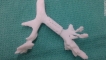 In 2012, doctors were able to 3D print a splint to support the airway of an infant suffering from bronchmalacia.
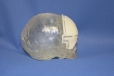 Last year, doctors were faced with a newborn suffering from unilateral coronal synostosis, a condition where two skull plates fuse before they should - leaving the brain limited for growth space, and the solution was to 3D print a skull plate to replace the limited sections.
There are a number of stories now about 3D printing hand or finger replacements for children. NPR offers a news report (less than 8 minutes) on how this developed from puppetry to a carpenter in South Africa named Ivan Owen.
3D printed prosthetics are a great example of how this new process will benefit people around the world. As a result of Ivan Owen's work and help, a father was able to print a prosthetic hand for $10.
The history of 3D printing isn't as short as you might think. Invisilign braces have been used since 2000 and Align Technologies 3D prints 65,000 braces per day. It has proved to be a viable and profitable method for aligning teeth without a mouthful of metal, though their process is more expensive than traditional metal braces.
The future of 3D printing for medical needs is bright with several advancements expected to save or better lives at a fraction of traditional costs. They include:
- Printing skin in place of expensive grafts for burn victims
- Prosthetic eyes with greater realism
- (Update) Printing bionic ears with the ability to receive radio signals
- Printing bones to replace skeletal defects
- Internal organs will remain a challenge, but researchers are working to 3D print organ replacements to solve the backlog of applicants on organ donor waiting lists.
Objects and replacement parts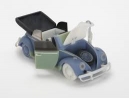 Two major advancements have been made in 3D printing. The first is work done by Objet (now part of Stratasys), who have a line of 3D printers able to print using 107 different materials - an important advancement for more complicated objects.
The other is advancements to include sensors and electronics in a 3D object as part of the printing process in place of adding these after the print is complete.
Other important work includes printing superstrong materials that are super-light, which could transform the printing of military equipment in the field.
(update)
Art and fashion
 As always, artists are using new technologies and 3D printing is on the forefront of fashion. A few examples include work by Melinda Looi (pictured at left), clothing by Iris van Herpen, shoes by Pauling van Dongen, swimsuits by Continuum Fashion or even print your own lingerie with instructions from Samuel Bernier.
 Printing clothes may happen a few ways. Electroloom wants to provide a 3D printer, while OpenKnit (pictured at left) wants to open-source a solution for do-it-yourself knitting.
(update) Oluwaseyi Sosanya, a student at Royal College of Art, has developed a woven 3D material with a honeycomb structure capable of stopping knife stabs or slashes and even taking a blow from reaching the wearer of clothes printed using this method.
Traditional art is also seeing an impact. Great examples include 3D scultpture by Joshua Harker, blossoming flowers by artist Richard Clarkson, and others. The Van Gogh Museum is working with Dutch company Formart to replicate paintings with extreme accuracy. Museums are also scanning their artwork and providing free access to the models to print their own history.
(update) The startup Mink is developing a printer mixing ink with other raw materials to print your own custom makeup.
Architecture
Changes to how we build, both for modern homes and emergency dwellings, are being influenced by the speed and flexibility of 3D printing from putting up a house in a day to printing moon bases from native materials. Neri Oxman offers an interesting take on how architecture is changing with this new technology.
(update) ImpactLab has a nice article on 3D printed architecuture including how the WinSun Decoration Design Engineering Company has technology capable of printing 10 homes in a day and the material is made from recycled construction materials and industrial waste.
Other
3D printing has the potential to manufacture a wide range of consumer goods. A few to note include the hot topic of firearm printing, printable food, customized musical instruments, and, as sex always sells, sex toys (NSFW).
Not all printing will make the final product we desire, but they can help with the tools necessary to make something else.
What technologies are developing alongside 3D printing?
Aside from material and efficiency development, the creation of files enabling printable objects will be key to widespread acceptance of 3D printing. Two interesting technologies include the ability to extract a 3D object from a two-dimensional photograph and a new chip designed to take 3D photos.
 Extracting objects would mean the ability to recreate the rough size and scale of objects which no longer exist, such as photos of a toy from your childhood. Cameras able to take 3D photos would take us a step closer to these objects. It would still require a great amount of work to make a working or highly detailed object from these photos, maybe even more than designing from scratch. As 3D object creation software becomes more capable, it will be able to identify form and function from multiple images or video of a moving object and attempt to identify parts not in the frame based on context and item use.
4D printing (update)
While the first three D's are height, width and depth, the 4th D is time. 4D printing is when an object is 3D printed objects able to change shape over time. Based on work by Skylar Tibbits, a researcher at MIT, 4D objects can be printed flat and automatically form the necessary final shapes when needed - or even remain changeable over time.
What else might 3D printing offer? (update)
As the technology matures, new methods of using 3D printing to improve life keep appearing. One major social benefit may be the shift to local manufacturing in place of mass production overseas. While many are focused on the return of manufacturing to areas such as North America and Europe, from where most lower-end manufacturing has shifted to China, this should also scale to poor countries where goods often cost so much due to the foreign prices, but also the logistics of bringing retail goods to remote areas. 3D printing could enable every country in the world to slowly build up their local production to a majority of goods over time.
An example of this has already happened in Syria, allowing Oxfam to print water-efficient hand washing systems to reduce the spread of disease in this war ravaged region where the infrastructure has been destroyed. These systems, and many like them, should see global mass adoption within the decade.
On a different scale, and connected to local manufacturing, BBC Travel forecasts 3D printing for travelers. Instead of dragging items across the globe, future travelers may be able to print what they need after arriving at their destination.
Where do I get 3D model files to print?
Buying the printer is only a small part of the process to print a model. You need the file, which must be created or downloaded - models might be free or for sale.
We mentioned museums earlier, but there are also popular sites like Makerbot's Thingverse - which included more than 100,000 objects in June, 2013. Model respositories are growing and expanding. Making Society has a list of 37 Marketplaces to Share, Buy and Sell Designs for 3D Printing. Whether the future of 3D printing is open source, Creative Commons, paid or a combination, remains to be seen.
Creating a 3D model file is not a simple process and will require training for beginners. Here are some articles and videos to help you understand the process and issues a modeler may encounter:
- Getting Started with 3D Design from MakerBot
- How to Get Started: 3D Modeling and Printing at Popular Science
- Introduction to 3D Printing: From Concept to Product by Lauren Slowik
- Modeling for 3D Printing with Shapeways (using Blender) by Jonathan Williamson
- Things to keep in mind when designing for 3D printing at Shapeways
Is 3D printing expensive?
An article from 2008 compares the cost of 3D printers, @$5000 at that time, with the cost of laser printers in 1985 - @$7000 each. At the beginning of 2014, Amazon has four 3D printers rated at 4+ stars at under $1000 and four more under $1500. A friend told me she recently backed a $100 printer on Kickstarter called the Peachy Printer.
The cost for materials ranges widely. Shapeways, a company offering custom 3D printing orders, has a short list of material options priced per cubic centimeter. Ceramics are the least expensive starting at $0.35 per cubic centimeter, plastics range between $1.40 and $3, steel is the most affordable metal at $8, and sterling silver the most expensive option of all at $20-28 depending on level of finished quality. Costs would also be impacted by minimal wall thickness and other design details. Keep in mind these are retail prices, home prices may or may not be less expensive depending on the savings these groups can obtain for bulk purchasing.
(update) Amazon recently unveiled their 3D Printing Store, providing solutions for custom 3D printing a variety of objects and devices available on the site.
What are the potential downsides of 3D printing?
One of the lesser discussed, but more personally hazardous issues, is research that the dust and fumes created by 3D printing could impact the health of users.
Another concern is the amount of plastic waste 3D printing could create, waste that could end up in landfills, waterways or the ocean. Richard Horne wrote a call for ethical change on 3dprintingindustry.org, in which he provides a detailed outline of the importance for recyclable materials for this budding industry. The plastics for 3D printing remain costly, so companies like Filabot should have success selling machines designed to turn normal recyclable plastics into the types of filaments used by 3D printers. The ability to break down printed objects and reuse would create a recovery loop saving printer owners money while also keeping so much waste plastic from ending up in landfills.
Some claim 3D printing will wreak havoc on manufacturing, but some retailers are using 3D printers to put a "factory in a store." Home printing will be limited by price, expertise and the size of printers. Regional printing could become important to cutting shipping costs if labor costs for finishing and/or assembling are not too high.
For large products or components, there are many savings for additive manufacturing. Reduction in development costs and time requirements impact both the manufacturing cost per item before profit and also gains from bringing a product to market more quickly.
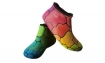 Finally, the most concerning for copyright holders is the loss of income from copyrighted and trademarked work. Similar to file sharing concerns from both the MPAA and RIAA resulting in lawsuits against torrent software developers and file sharers, 3D printing has the ability to impact every copyright and trademark holder in the world. Companies like Nike, with their easily identifiable Swoosh symbol will want to minimize it being applied to 3D printed objects. Companies like IKEA, who pride themselves on simple products with simple and attractive design, will not want products digitized for replication.
Conclusion
3D printing is the next big thing and will change the landscape of our consumerism for the better. How far and how cheap 3D printing can become is unknown. It seems every day* a new breakthrough in materials alone are announced that either expand the capabilities or make existing processes less expensive.
*On February 24, 2014, the 3ders.org printing materials feed showed advancements in weaving cotton into 3D pinting and a breakthrough in creating heat-resistant and food-grade bioplastics.
Industries will suffer from the change and special interest groups will attempt to make ownership and access to copyright-infringing files as difficult as possible. I suspect it will play out similar to digital media with printing materials seeing an extra tax shared out to copyright holders the way taxes on CD/DVD media has funneled payments to the MPAA and RIAA. Online printing houses will refuse to print copyrighted material the way photo printers refuse Disney characters. Eventually, copyright and trademark holders will provide their own digital files for sale and sites housing knock-offs will face take-down notices.
Additional articles and resources:
- Stratasys' new 3D printer creates multicolored flexible materials
- Why You'll Want A 3D Printer In Your Home
- BigRep's ONE can 3D print full-sized pieces of furniture
- The Legal Perils of 3D Printing
*A special thanks to Catherine Clements for her review of the article prior to publishing and thoughts from her experience as a 3D printer.
Explicit:
Location:
 Interested in the social impact of our future advancements, Daryl developed and built Regarding Tomorrow as a platform to share and discuss our collective hopes and fears of the future. Daryl's background is in education, including graduate studies in special needs and a masters in instructional technology from UVA's Curry School of Education. He has worked as a high school teacher and has over 10 years of university experience in the US and Canada.