Human form (adaptation)

Splice (2009)

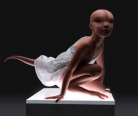
View of the spliced creatureAs genetic engineering progresses, humanity will be faced with issues of morality time and time again. Splice looks at the field of artificial life and the specific issue of combining human and non-human DNA. In the film, two researchers, facing the loss of their research, decide to combine human and animal DNA to create a new life form - just to prove it can be done. Once the birth occurs, each has a different response to the creature and those responses change over time as Dren develops towards adulthood.

The plot focuses on the different relationships Clive and Elsa have to the being they have birthed for science. Fearing their employer's response, they hide Dren and eventually mover her off site to protect her. Dren's development affects both scientists in different ways, with each responding to Dren and each other in different and sometimes horrific ways.


The impact of life extension

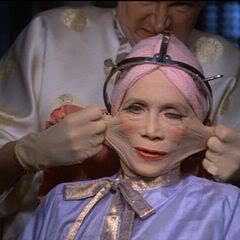
Katherine Helmond getting her face stretched in the movie BrazilPromises to extend lifespans keep rising. Some online surveys peg my lifespan between 76 and 88 years old, but specialists are claiming lifespans as long as 140 years for some humans as medicine provides the ability to regenerate, grow, or print and replace human tissue. With ongoing breakthroughs in organ printing, providing they can get bodies to accept the replacements, it is theorized the replacement of every body part with the possible exception brain can be replicated and the limitation with the brain is shifting our persona/character/self/soul into a viable replacement - an advancement that could truly create immortality.

If this turns out to be true, then science is really looking for ways to keep the brain healthy and living for a longer duration. Looking back at Bruce Sterling's novel Holy Fire, the character Mia lives by the rules governing her participation in a lifetime-enhancement program. I'm not certain longevity won't be available to the masses, or at least those who can afford the payments for procedures or insurance to cover the costs, but I do suspect Sterling got it right that longevity will be a privilege and not a right.

Suspended animation and cryonics are no longer science fiction

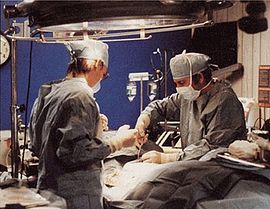
Surgeons preparing a patient for cryopreservationA team of surgeons at UPMC Presbyterian Hospital in Pittsburgh, Pennsylvania are being allowed to place the traumatically wounded victims of gunshot wounds into suspended animation to gain time before blood loss decreases the chance of survival or, in the survivors, permanent decreases in cognitive function and memory loss. The trial will allow this one team to use this technique on ten emergency victims, who will have their body temperatures decreased to 50F (10C) with a special focus on decreasing cellular activity in the brain.

The temperature drop involves forcing cooled saline through the heart to the brain, dropping critical tissue to temperatures low enough, they no longer require an oxygen source to remain intact. Normally, brain tissue begins to take permanent damage after 5 minutes without oxygen. In these trials, patients may remain in suspended animation for up to two hours, giving surgeons more time to rebuild and repair before attempting to revive the patient.

Love Minus Eighty

Love Minus Eighty book coverWelcome to the early 22nd century. Social media connects the elite in real time, and the digital divide has birthed a divide so complete it has manifested a near-complete physical disconnect. And while our mortality has not been conquered, reanimation has been perfected for those who can afford it. For those who can't, there is 'freezing insurance.' And for pretty, young women who can afford insurance, but not reanimation, there is a partial life in the 'bridesicle' dating service, where if you're pretty and willing enough, a one-percenter might marry you on your deathbed before taking you home as a bride-slave.

Will McIntosh's short story "Bridesicle" won both the Hugo Award and Asimov's Reader Poll in 2010, and was a finalist for the same year's Nebula Award. Love Minus Eighty is based on the short story and a brilliant dystopian look at a future that forecasts many of today's headline issues. McIntosh offers a very engaging world where the storyline shifts between High Town and the suburbs, contrasting the have's and have-not's of the world. Looking at the social changes, it feels like McIntosh did a good job of taking some of our current systems such as social media and incoming advancements such as life-expansion and autonomous systems forward in ways that are both promising and sour to current tastes.
Can technology help dementia sufferers maintain independence?

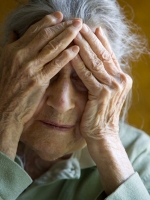
Elderly woman with hands over faceWhile medicine looks for both the cause and cure of dementia, millions of elderly around the world begin feeling the symptoms every year. New technologies, some existing now and some maturing towards consumer products, offer not only real-time information, they also include ways to inject this information into human interaction with their surroundings. Visual overlays in Google Glass, context aware assistive services such as Google Now, and our ever-present GPS location awareness can combine to provide supportive interactions with our world.

While these advancements are being developed for mass consumer adoption, they can also provide support for individuals who live with limitations such as dementia. I've been working on some ideas on how our elderly might use these devices, struggling to get traction beyond what is easily described and would be used by individuals, whether healthy or dealing with dementia. Then I recently heard about VocalID, a group collecting a range of human voices for the use of those without a voice of their own. In the past, individuals unable to speak were limited to a very small set of digital voices - most of them identical to the voice used by Stephen Hawking. To provide semi-unique voices, Dr Rupal Patel founded the Communication Analysis and Design Laboratory (CadLab) and the VocalID organization - the latter which collects 2-3 hours of donor voices to provide options for individuals suffering from severe speech impairment.

Impact of technology on our youth

Toddler with a tabletThis week gives us a warning from the UK's Association of Teachers and Lecturers of young children losing core abilities as the result of tablet overuse. According to a Telegraph article:

  • Children of three and four are able to manipulate a tablet screen, but "have little or no dexterity in their fingers" after hours of this activity and are not developing the dexterity to play with building blocks.
  • "...some older children were unable to complete traditional pen and paper exams because their memory had been eroded by overexposure to screen-based technology."

Protect your DNA

A young John LennonJohn Lennon was gunned down 34 years ago. If still alive, he would be 74 years old. In 2011, one of Lennon's former housekeepers sold one of Lennon's teeth at an auction in England. The winning bid belonged to Dr. Michael Zuk, a Canadian dentist. Zuk is making headlines this week by admitting plans to have Lennon cloned from DNA remaining in the tooth and raising the resulting child as his own. It brings up many questions, including the morality of cloning someone famous and who owns your DNA once you pass on.

Will drugs + devices = superhuman intelligence?

Colorful pillsRaw intelligence is a major factor in our individual level of success - some develop more and some develop less. Whether attempting to maximize your income, research a cure for cancer or win a sporting contest, the ability to take a range of information, internalize it, and turn it into effective decisions can heavily influence whether we encounter failure or success at each task. Human intelligence is the outcome of millions of years of evolution and access to opposable thumbs has provided the ability to make the tools we have used to conquer our world. While there are proposed methods for increasing our intelligence, some individuals are using different technologies and chemicals to increase their own.

A stronger, sexier, younger body

Robot stripper on screenI've been watching this video make the rounds for about two weeks. My first thought upon seeing it was, "How long before Madonna is on the phone with Kurzweil and Kaku to figure out when she can dump her brain into it and plan a new world tour?" Humorous, but hardly kind. Though I'm no fan of Madonna and believe she is narcissistic to the extreme, I also have to admit most of humanity is the same way. If we could push our minds into machines like these, how many of us would and how often?

Ventus

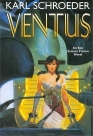
Ventus book coverVentus is one of those scifi novels that strikes a great balance between plot, characters and new technologies - and a few old ones. One of my favorites and it's free on his website (or you can donate something for a novel that offers both education and entertainment with 4 stars on Amazon and 4.6 on Manybooks) if you're looking for something to occupy your weekend until winter finally sails away.

Pages