Human form (adaptation)

A Woman Sold for Her Brains and Body

"And this, Mr. Trupp, is our greatest gem."

The attendant led the woman...no, girl this time...by the hand as she had the others. Warren wondered if this 'demo mode' hurt them or if they were even aware of the time passing.

As with the others, the attendant brought her into the room, told her to twirl and sat her on the sofa opposite him. Mr. Lomen reached up to caress her cheek with two fingers. The girl did not flinch or even seem to notice his presence.

New technologies allow us to track everything: should your employer?

Screen capture from the film Modern TimesA short article from Popular Science reports how companies are using new technologies to track employee work habits and lifestyles in order to mold a better employee. Part of the age of new life tracking termed the 'quantified self', they reference three articles on the subject. Here is a list of what is being tracked:

    Sleep
    Distance walked or run
    Diet
    Time spent sitting at their desk
    "Happiness"
    "Performance data" on how well employees communicate with each other and shoppers
    "Tone of voice, movement and even posture when communicating with others"

Can DNA be linked to future crime?

Leatherface with a chainsawIn December 2013 an assault on Sandy Hook Elementary ended with the sad deaths of twenty children and six teachers, after the killer took the life of his own mother and before taking his own. Andrew Solomon gives us a look at the killer's father (I refuse to print his name - infamy should not be gifted on a killer) and the fall out in his life a little over a year after the shootings.

Suicide in an aging world: could it become an industry?

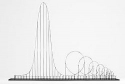
Suicide roller coasterThe Euthanasia Coaster is a roller coaster concept by designer Julijonas Urbonas. The coaster is designed to generate a steady 10g of force on the riders for long enough to cause cerebral hypoxia. Could death by amusement ride be part of our future or is this just too sci-fi to consider?

According to the American Foundation for Suicide Prevention, there were 38,000 suicides reported in 2010. From these figures, the age of 85 and over has remained among the two highest categories since 2000 (and before if we notice this demographic was 20% of all suicides in 2000 - 6 points higher than the next demographic). Only since the most recent economic instability has the age 45-64 moved to the top. Before that, the numbers followed a trend from youngest to oldest with greater age equaling greater rates of suicide.

Where will technology and big data take our future?

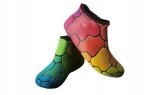
Stratasys 3d printed shoes

Technology is slowly infiltrating every area of our human existence. I read Alistair Croll's Race Alongside the Machine today on re/code and it led me to a reflection on how we humans are being changed by the technology we develop and where this might lead in the future.

When I came up with the original idea for a future-focused site, I immediately created a short list I called "aspects of human existence." I've changed them to "elements of how we live" and use them as story tags, a taxonomy vocabulary in Drupal terms, in order to help users find content. After reading Croll's piece, I decided today's exercise would be to look at the (now much longer) list and see what I can come up with for where current trends and predictions will take us as we continue to combine humans, technology and big data.

What will it take for you to get a data chip embedded in your body?

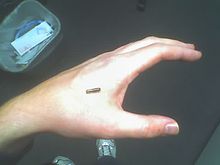
RFID chipData chip implants
What it is - Implants embedded in our bodies. They allow us to access current services such as GPS and RFID. In the future, they can be used to store medical device and other data, connect with cellphone systems and even connect with friends as a form of artificial telepathy.

Can genetic testing identify Olympic level athletic potential?

Usain Bolt The premise of the Olympics is to measure and reward the greatest human ability at various skills or sports. Modern pharmacology offers many substances identified as potentially beneficial to an athlete - meaning they give an unfair advantage to a competitor - the World Anti-Doping Agency provides a nine page handout identifying substances for which an athlete can be disqualified. With so much pressure on the athletes and so much money for sponsorships on the line, there are substantial reasons to cheat for those who are less sporting.

That doesn't mean there aren't other ways to help athletes reach or maintain their potential. In addition to regular training and hiring the best coaches, athletes also use the services of dieticians, massage therapists, sleep counselors, hydration specialists and gait analysis professionals in order to smooth every bump in their lifestyle, conditioning and performance. Some athletes even choose to sleep in a chamber that mimics high-altitude air quality to increase performance. And as modern research enables more experiments finding ways to benefit athletes that aren't cheating, by eliminating hurdles that keep athletes from reaching their peak performance, we'll hear of more bizarre - and questionable - methods athletes will use to enhance their skills.

Extremis - Iron Man becomes posthuman

ExtremisWarren Ellis introduced the Extremis concept to Iron man in a 6-issue story arc starting in January 2005. This arc changed Tony Stark from a cyborg to a posthuman by introducing nanotechnology into his body and altering his physiology to include direct connections with the Iron Man suit. Ellis introduced many concepts and characters that were used in the Iron Man movie trilogy, especially Iron Man 3.

If you're into superhero comics, this is a short arc you don't want to miss. It's available on Marvel Unlimited or through Amazon. In typical comic-book style, it takes some complex scientific breakthroughs and turn them into a magical elixir, yet it brings many of the reasons we research posthuman adaptation into perspective given Stark's need to deal with the story villains. And there are a few great conversations in which characters wax philosophical about their Frankensteinian need to create a future that might be more monster than they would like.

The Future of the Mind: The Scientific Quest to Understand, Enhance, and Empower the Mind

Dr. Kaku provides of his new book and how our understanding of the human mind will enable some amazing feats in the near future - including the ability to record  thoughts in rats and be able to play them back into the rat's brain so the thought is relearned by the animal.

What are the long term social impacts of neuro-enhancing technologies?

A couple wearing Foc.us devicesWired's Christian Jarrett covers a new technology designed to "overclock your brain." It's a great article in which he thoroughly covers the spectrum of what benefits the Foc.us offers, a bit of history, and some of the warnings we should be aware of.

For this article, let's pretend it is possible to use electrical current to stimulate our brains, making the user "smarter." What are the social impacts? Let's look at a few.

Pages