Suicide in an aging world: could it become an industry?
 Printer-friendly version
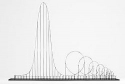 The Euthanasia Coaster is a roller coaster concept by designer Julijonas Urbonas. The coaster is designed to generate a steady 10g of force on the riders for long enough to cause cerebral hypoxia. Could death by amusement ride be part of our future or is this just too sci-fi to consider?
According to the American Foundation for Suicide Prevention, there were 38,000 suicides reported in 2010. From these figures, the age of 85 and over has remained among the two highest categories since 2000 (and before if we notice this demographic was 20% of all suicides in 2000 - 6 points higher than the next demographic). Only since the most recent economic instability has the age 45-64 moved to the top. Before that, the numbers followed a trend from youngest to oldest with greater age equaling greater rates of suicide.
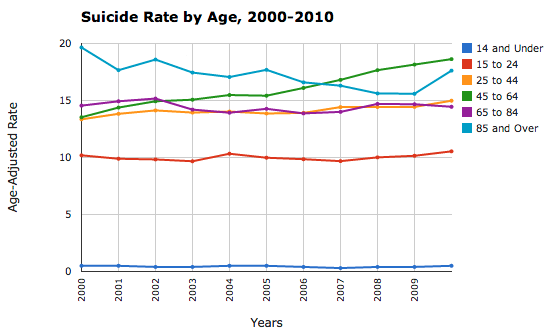
From the American Foundation for Suicide Prevention
There are many reasons for someone to attempt suicide. Why would greater age generate a higher suicide rate? There are strong links between suicide and depression, though there are other reasons as well, such as sleep problems, limited social outlets and failing health.
It's important to note all of these issues can also be linked to aging. Sleeplessness can be caused by pain or something as simple as frequent urination. Pain can be caused by failing health as many types of health issues can cause discomfort or consistent pain. Limited mobility or decreased energy can lead to avoidance of social opportunities, which increases the feeling of loneliness. If this is happening in the age of modern medicine, what might the future offer?
Science keeps promising the ability to lengthen lives somewhere between adding a few decades to indefinite lifespans if we can just live long enough for the next advancement to occur. With no current breakthrough, it is important to note modern medicine has adjusted the average lifespan from 31 years to 67.2 years in the century between the early 20th century and 2010.
While adding a few more decades sounds good, it is important to note there is a difference between lifespan and healthspan. A lifespan is simply living and breathing, even it you require assistance to leave your chair, a walker to move to the next room, and your movement is impeded by both an oxygen tank and colostomy bag. A person in a coma has a lifespan. But they have no healthspan until they revive and regain the ability to interact and enjoy life.
Joel Garreau offers us a look at four possible methods for extending life. They include:
- A small change: "...the exponential increases in the biological, genetic, neurological, information, nano, and implant technologies have relatively minor impact on current trends in lifespan, healthspan, costs, hospitals, health insurance, Social Security, Medicare, Obamacare, and federal policy."
- Drooling in their shoes: "...the exponential advances in the GRIN technologies (genetics, robotics, information, and nanotechnology) succeed in increasing lifespan, but largely fail at increasing healthspan."
- Live long and prosper: "...marked advances in personalized medicine, tissue engineering, organ regeneration, implants, and memory enhancement, as well as novel means of peering into the body and major interventions in heart disease, diabetes, and cancer."
- Immortality: "...all you have to do is turn this line into a curve a little—increase this rate by a factor of four —and you have life expectancy advancing one year for every year you age. And you have something that looks like immortality for some people."
The article is an informative and fun read, especially as it appears Google and Apple are both ramping up health awareness in wearables and personal computing. It begs the question "What are the major issues for the elderly and can we solve them?" Here are some major issues for the elderly and how they might get resolved so individual healthspans can extend to nearly 100% of a person's lifespan.
- New teeth via stem cells
- Repairing bulging or herniated disks with regenerative stem cells
- Muscle rejuvenation via stem cells
See a theme here? Hint: it's stem cells.
- Stem cell cure for type 1 diabetes
- Replenishing inner ear sensory "hairs" from stem cells
- Stem cell therapy for urinary incontinence
- Stem cell treatment for bone fractures and osteoporosis
- Healing damaged heart tissues with...wait for it...stem cells
It's also important to note not all stem cell therapies are proven to be either effective or safe. But considering America's scientists couldn't work with stem cells until Obama overturned the Bush-era restrictions in 2009, it seems we've come a long way in five years.
- Immunotherapy for Alzheimers
- Gene therapy and stem cells for Parkinson's
- Gene therapy and cancer treatment
- Chemical treatment for arthritis
Even if only half of these treatments work out, there could be a great impact on the average lifespan. Sadly, they might not arrive as affordable methods for a few decades, leaving these advancements available and beyond the reach of all but the wealthy. For those, and I might be old enough to miss the full benefit, what do we do when we have the ability to live longer, but our bodies and/or minds are damaged enough to make them less than perfect? Would individuals, tired of life and willing to end them on a high note, pay for an amusing end?
Going back to the Euthanasia Coaster, Japan built the roller coaster with the world's sharpest incline for $37 million in 2011. Would the Euthanasia Coaster be affordable? Let's say it cost $60 million, how many riders would it take and at what price per final ride? What about a ride on the Titanic? Death by sexbot?
What do you think - as the number of elderly rise, will we become comfortable with suicide? Will they be willing to end in ways that are enjoyable? Could an industry enable their passing? Would you be willing to pay for one last blast that ended with THE END?
 Interested in the social impact of our future advancements, Daryl developed and built Regarding Tomorrow as a platform to share and discuss our collective hopes and fears of the future. Daryl's background is in education, including graduate studies in special needs and a masters in instructional technology from UVA's Curry School of Education. He has worked as a high school teacher and has over 10 years of university experience in the US and Canada.