What are the long term social impacts of neuro-enhancing technologies?
 Printer-friendly version
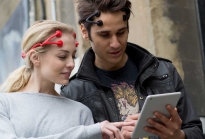 Wired's Christian Jarrett covers a new technology designed to "overclock your brain." It's a great article in which he thoroughly covers the spectrum of what benefits the Foc.us offers, a bit of history, and some of the warnings we should be aware of.
For this article, let's pretend it is possible to use electrical current to stimulate our brains, making the user "smarter." What are the social impacts? Let's look at a few.
- Inequality: The digital divide is growing, not shrinking. This certainly seems like another opportunity for the wealthy to adopt expensive ($299 for this item) technology. How much benefit does this provide over less wealthy competitors?
- Different levels of success: Each person is a unique being with a unique response. In time, research could customize devices to each person, but until that happens some will see greater benefits. What happens to those who don't receive a benefit?
- What are the age limits?: How young is too young? It took decades of research showing young children using weights should avoid near-maximal lifting in order to avoid joint issues down the road. Will we have a decade of spelling bee and chess club champion wannabes with mental issues from using tDCS technology?
- Targeted boosts - or a bad high: Once the systems are developed and cheap enough, what apps will be developed? Will there be an app for music and an app for spelling? Will there be a process for boosting memory in the elderly and a process for simply increasing awareness on long drives? Will someone find ways to create a high from this - a virtual meth or speed or LSD? Will it be legal?
- Limiting to appropriate use: And how do we define appropriate use? Can students use this before testing? During testing? Are athletes allowed to use this before games or will it be restricted the way caffeine and attention enhancing drugs are in competitive spot testing.
There's a whole realm of bio-enhancing technologies coming down the pipe and no real research to hold them back. Given the way most governments struggle to remain up to date on new methods, it makes sense we'll see many make it to market as an attempt to create a new segment of "medical" or "assistive" devices. As such, we need to be very careful, especially parents, about which technologies are allowed to be used by or on ourselves or our children.
 Interested in the social impact of our future advancements, Daryl developed and built Regarding Tomorrow as a platform to share and discuss our collective hopes and fears of the future. Daryl's background is in education, including graduate studies in special needs and a masters in instructional technology from UVA's Curry School of Education. He has worked as a high school teacher and has over 10 years of university experience in the US and Canada.