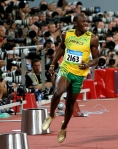
 The premise of the Olympics is to measure and reward the greatest human ability at various skills or sports. Modern pharmacology offers many substances identified as potentially beneficial to an athlete - meaning they give an unfair advantage to a competitor - the World Anti-Doping Agency provides a nine page handout identifying substances for which an athlete can be disqualified. With so much pressure on the athletes and so much money for sponsorships on the line, there are substantial reasons to cheat for those who are less sporting.
That doesn't mean there aren't other ways to help athletes reach or maintain their potential. In addition to regular training and hiring the best coaches, athletes also use the services of dieticians, massage therapists, sleep counselors, hydration specialists and gait analysis professionals in order to smooth every bump in their lifestyle, conditioning and performance. Some athletes even choose to sleep in a chamber that mimics high-altitude air quality to increase performance. And as modern research enables more experiments finding ways to benefit athletes that aren't cheating, by eliminating hurdles that keep athletes from reaching their peak performance, we'll hear of more bizarre - and questionable - methods athletes will use to enhance their skills.