1 Happening now (until 2025)

Rise of the Planet of the Apes (2011)

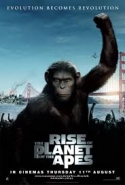
Rise of the Planet of the Apes posterThe original "Planet of the Apes" introduced us to a world where humans are secondary to our closest family species in the great apes. The film relaunch of "Planet of the Apes" set those events in our future. "Rise of the Planet of the Apes" explains why these species are uplifted to human-level intelligence and the resulting conflict when humans attempt to deal with "alien" emotions, attitudes, and actions.

The film focuses on the development of an uplifted chimpanzee named Caeser, who gains human-level (or greater) intelligence as a result of the pharmaceutical testing of a potential Alzheimer's cure on his pregnant mother. Raised by the scientist who developed the cure, the film presents Caeser's life from a newborn to his role as a leader of a group of uplifted animals.

The Gate (2011 short film)

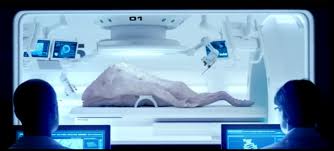
Screen capture from The Gate The Gate is a short film depicting a horrific event where humans are modified via unlicensed pharmaceuticals. Using a governmental review of the event as the structure, flashing back to images of mutants and conflict with authorities, it presents how the events came about and who was effected. A brief glance at what could happen if current pharmaceutical practices continue as the ability to manufacture designer drugs become the norm.

Radical Abundance: How a Revolution in Nanotechnology Will Change Civilization

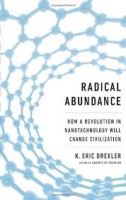
Book coverEric Drexler introduced the world to nanotechnology in his first book, Engines of Creation: The Coming Era of Nanotechnology. In his newest book, Radical Abundance, Drexler presents a range of information, informing the reader of the process of nanoscale manufacturing, current efforts and research (and hurdles), and the benefits to science, society, and the planet once we achieve the reality of nanoscale fabrication.

Drexler presents APM (atomically-precise manufacturing) as the next revolution, the first three being agriculture, industrial, and information. This revolution will be powered once we control "the molecular machinery of life (using) proteins that can fit together to form motors, sensors, structural frameworks, and catalytic devices..." By using natural systems to construct from the atomic level towards larger and more complex products, we can manufacture efficiently, using common chemical substances in place of minerals and metals acquired through ecologically damaging mining, and to create materials we cannot visualize today.

In Drexler's future, APM solves many of the societal issues that create poverty, ecological disasters, and conflict. It's an important work that gives us a future to look forward to when so many visions are broken and dystopian.
Blade Runner (1982)

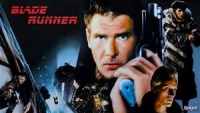
Considered one of cinema's most influential science fiction films, the Blade Runner screenplay was based on Philip K. Dick's novel Do Androids Dream of Electric Sheep? and directed by Ridley Scott, who also directed sci fi classics Alien and Prometheus. Blade Runner is set in our near future, 2019 is only 5 years away, against a dystopian backdrop of a filthy, crowded, culturally mixed cityscape on a planet where most humans appear to have left for other colonies. As with most classics that visualized technological and ecological hell on the other side of the year 2000, the vision is not accurate. Yet, it navigates issues we are discussing today because they will be here tomorrow.

The Island (2005)

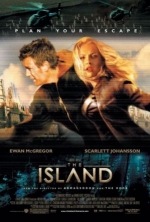
The Island dvd coverClones are big business in the future. Buy your own to supply the parts you require when sickness or injury threaten your life. The Island is a sci-fi action adventure set in the not-too-distant future, told from the viewpoint of two clones as they discover the truth of their existence and work to uncover corporate inhumanity.

Lincoln Six Echo and Jordan Two Delta are clones living in a safe, controlled world among others of their kind. History tells the outside world is too contaminated for life outside the compound, with only one remaining island clean enough to support human life. The clones live their routine hoping to one day win the lottery and move to the island, where they can live out their lives under the sun. But it's all a lie fabricated to keep them controlled and hopeful, two things necessary for the products, their bodies, to remain healthy.

Gravity (2013 film)

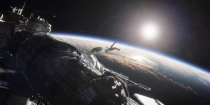
Gravity scene grabGravity is a highly detailed action thriller set in Earth's orbit. Starting with a what should be a routine Hubble Space Telescope repair, the mission ends as events threaten the shuttle and astronauts. The movie spins the lead characters, of which there are two, through a series of attempts to survive in orbit while seeking a way back to Earth.

The Escape

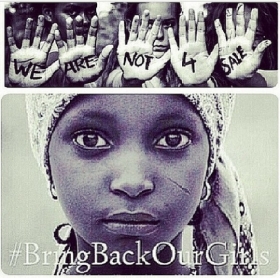
Bring Back Our GirlsAbeo heard and felt her phone signaling. Not the ringing of a call or vibration of an update, but the signal of alarm. Around her, the other girls in her school pulled out their phones to read the same message. The conversations of the cafeteria grew raucous, as if quiet was really possible in a school at lunch, and teachers began to usher everyone towards the parking lot.

Buses were being started outside, starters cranking antiquated engines to life. While some technologies had made it to their corner of the world, gas and diesel engines remained the norm for at least a bit longer. Electricity was now everywhere with solar panels costing very little for a day's energy, but vehicles with batteries went to regions with more money to pay for them.

Overhead, small flocks of drones buzzed to the sky taking a quick reconnaissance of everything that moved - even in their part of Africa, nearly anything that moved was tracked in some way. Abeo climbed into the front seat and waited while the bus filled with her peers. She pulled up the pages linked from the warning and, reading between the lines of governmental jargon, discovered that suspected terrorists were blitzing their small city.

Song From a Forgotten Hill

Winter's Dreams book coverIn 1971, Glen Cook, an author known for his gritty fantasy novels, wrote the short story, "Song from a Forgotten Hill." Recently included in a short story collect, Winter's Dreams, "Song" is not your normal science fiction, though it is a dystopian view of a broken American landscape where the country has been through three "fires." The first is from Russian nuclear strikes on major American cities. The second is "when (black) militants burned remnants of Whiteys' cities." The third occurs when the US military's return from the war (presumably with Russia) leads to a civil contest "between whites and blacks."

In the anarchy following nuclear holocaust, Cook depicts the worst of humanity as sides are formed on American soil. Black militants strike at governmental infrastructure and then white rednecks turn back the hands of time to revisit the atrocity of slavery. In the midst of the aftermath, we find a a black protagonist, a veteran of the Vietnam war, attempting to keep his remaining family, "Four kids, the oldest fifteen, and no wife," safe and free in the wilderness: "The war killed most of the good folks. They lived where the bombs fell. The rednecks and the militants seem to be the only survivors. And now the rednecks, who had waited so long for their chance, are 'putting 'em back in their place.' There are very few of us out here in the hills. We're hunted, and running, but free."

Can technology help dementia sufferers maintain independence?

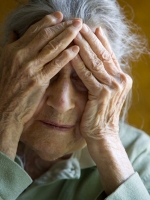
Elderly woman with hands over faceWhile medicine looks for both the cause and cure of dementia, millions of elderly around the world begin feeling the symptoms every year. New technologies, some existing now and some maturing towards consumer products, offer not only real-time information, they also include ways to inject this information into human interaction with their surroundings. Visual overlays in Google Glass, context aware assistive services such as Google Now, and our ever-present GPS location awareness can combine to provide supportive interactions with our world.

While these advancements are being developed for mass consumer adoption, they can also provide support for individuals who live with limitations such as dementia. I've been working on some ideas on how our elderly might use these devices, struggling to get traction beyond what is easily described and would be used by individuals, whether healthy or dealing with dementia. Then I recently heard about VocalID, a group collecting a range of human voices for the use of those without a voice of their own. In the past, individuals unable to speak were limited to a very small set of digital voices - most of them identical to the voice used by Stephen Hawking. To provide semi-unique voices, Dr Rupal Patel founded the Communication Analysis and Design Laboratory (CadLab) and the VocalID organization - the latter which collects 2-3 hours of donor voices to provide options for individuals suffering from severe speech impairment.

The Silent Intelligence: The Internet of Things

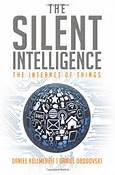
The Silent Intelligence book coverThe term "Internet of Things" is thrown around a lot, even used in parallel with other terms describing the same thing for a specific area of focus. Even after reading a range of articles over the last few years, I felt my understanding remained a bit vague and decided to look for a resource with depth and breadth. Kellermeit and Obodovski's The Silent Intelligence: The Internet of Things comes highly rated on Amazon (4.5 stars) and seemed more informational than application-oriented books such as McEwen and Cassimally's Designing the Internet of Things, or Robert Scoble and Shel Israel's Age of Context: Mobile, Sensors, Data and the Future of Privacy - which I plan to read as well.

Pages