Avoiding the worst effects of radioactive fallout
 Printer-friendly version
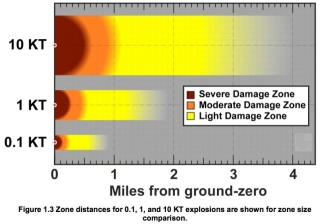 Annalee Newitz of IO9 interviewed Michael Dillon, an atmospheric scientist at the Lawrence Livermore National Laboratory. They focused on Dillon's research about how the government should respond in a disaster scenario where an airborne threat can continue to spread. If you're interested in future scenarios happening after a man-made calamity, this is a great source of information.
Dillon's study on Royal Society A
 Interested in the social impact of our future advancements, Daryl developed and built Regarding Tomorrow as a platform to share and discuss our collective hopes and fears of the future. Daryl's background is in education, including graduate studies in special needs and a masters in instructional technology from UVA's Curry School of Education. He has worked as a high school teacher and has over 10 years of university experience in the US and Canada.