Nanoribbon electricity generation from human organs
 Printer-friendly version
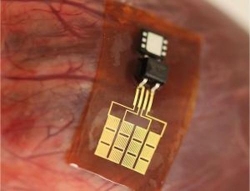 Researchers at the University of Illinois-Champaign have created a new flexible technology, a nanoribbon, that attaches to human organs and is capable of generating electricity as the organ moves. The current technology is focused on providing power for pacemakers so long term use of these devices could require less surgeries and also be less intrusive in the body.
The other half of the breakthrough is the ability to generate up to 8 volts of electricity from a single device embedded in the body, enough energy to power low-energy devices as long as the nanoribbon (and body) continue to function. Looking long-term, this makes it possible to go past the wearables marked into embedded sensors, monitors and even controllers (OH MY!).
Aside from pacemakers, devices could also be used for supportive modifications such as blood sugar sensors for diabetics and embedded hearing aids or powered replacements for the deaf. Looking at it from a dystopian world view, it could also sense prohibited chemicals in welfare recipients or actively monitor a parolees behavior, location and emotions.
While those might seem perfectly reasonable depending on your political views, this could go farther towards monitoring a racehorse's real-time biodata or tracking a pet. It could be used to protect endangered species - imagine an elephant with a small camera embedded behind its eye and able to send that video to anti-poaching groups. The animal's elevated heart rate pulls drones in the direction it is looking to identify if the threat is another bull or a poacher.
It could also power technology to pull our biodata or track us in realtime.
I don't take the negativity too far, the nanoribbon is a major breakthrough and, once implemented to improve medical systems, will save and lengthen lives. It's an advance worth cheering.
And on a positive note, it could go far beyond human bodies. Buildings, vehicles, clothing, trees and towers all bend in response to external controls whether it's human movement wind causing the movement. It will be interesting to watch the roll-out of creative ways to use this technology to provide energy to devices difficult to power through traditional means.
 Interested in the social impact of our future advancements, Daryl developed and built Regarding Tomorrow as a platform to share and discuss our collective hopes and fears of the future. Daryl's background is in education, including graduate studies in special needs and a masters in instructional technology from UVA's Curry School of Education. He has worked as a high school teacher and has over 10 years of university experience in the US and Canada.