On Earth

Who owns the moon?

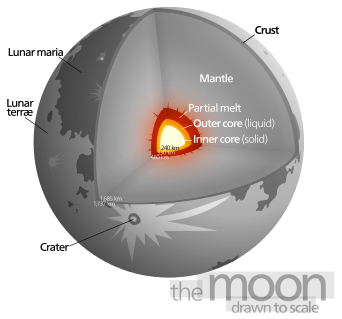
Interior view of the moonWhile there has only been a single trip to the moon involving humans, some groups view our only natural satellite as a hunk of resources waiting to be mined. In her article "Who owns the moon?" Dr Saskia Vermeylen provides an overview of the current laws and agreements governing moon property rights and how they might be handled based on current laws and treaties.

It's important to note there is another preceding treaty currently signed and ratified by a majority of nations. The 1967 "Treaty on Principles Governing the Activities of States in the Exploration and Use of Outer Space, including the Moon and Other Celestial Bodies" was designed to exclude using the moon as a base for weapons and also to limit national appropriation of moon property.

It may not be long until a new treaty needs to be discussed. Though current propulsion systems are not capable of bringing sufficient minerals back from the moon (or asteroids) to make the trip profitable, with current efforts focused on space tourism and transport, the need for more efficient methods to break free of Earth's gravity has never been more valuable. With intelligence and money being thrown at the problem, we should expect more efficient engines or alternatives within the next decade. There are many theories being researched that include space elevators, skyhooks, rail guns, and (safely) blasting it out of the atmosphere with lasers.

Using cybernetics to synthesize biology and create an "Internet of Living Things"

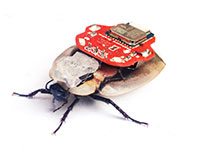
Robot roach In an article on Huffington Post, Professor Lee Cronin offers some insight and asks some interesting questions about the future of cybernetic biology. He specifically focuses on developing an ability to control bacteria and plants in order to create a networkable ecosystem we could use to benefit society.

He also asks for ways such a technology could be misused. It's a brief, but compelling piece pointing out the benefits, concerns and even the issues of avoiding such research. Certainly worth reading to get some insight into an expert's view of this future and some of his points about how starting the conversation ahead of the ability can benefit researchers to increase technology safety before it arrives.

For more information on Gage and Marzullo's research, check out our article on their work.

Cybernetic Synthetic Biology And The Internet of Living Things via Huffington Post

Futurepath: Human employment

Baby fed by a robotLast year, Carl Benedikt Frey and Michael Osborne published their paper, "The Future of Unemployment: How Susceptible are Jobs to Computerisation?" In their research, they identified that nearly half of US jobs will be automated within the next 10-20 years. Since then, there is a rising sense of urgency represented by the range of articles presenting the medium to long-term career forecasting of either a world of high unemployment or a world in which robotic productivity creates a socialist scenario where all humans maintain a minimal life quality without concern over unemployment. Digging more deeply into viewpoints with more diverse data and historical comparisons show a lot more reasons to be either bullish or bearish on the future.

Futurepath: Energy

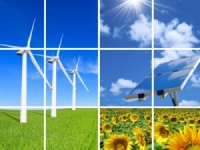
Energy mosaicFrom ultra-modern Manhattan penthouses to cell phones and radios in sub-Saharan homes, from private jets zipping over the oceans to motor scooters in southeast Asia - we require energy to power our lives. At this point, only protected Amazon tribes and the few humans who have chosen to live off the energy grid do not use any of the world's energy supplies.

Overall, we humans use in excess of 500 exajoules of energy per year. The energy we produce is derived by a variety of sources such as nuclear; fossil fuels, including coal, crude, and gas; and renewables such as wind, hydro, and solar. These fuels are broken into two main types of use, the first is locomotion via fuel burning engines and the second is the creation of electricity, which is then used as a source of power for motors, lights, appliances, and the gadgets we use (to name a few).

What will future jobs look like?

Andrew McAfee, one of the authors of The Second Machine Age, gives a presentation on the future of jobs as one of his TED talks. He provides a nice overview of the benefits and challenges of "the new machine age" and, on the human side, who will be impacted. At 15 minutes long, it's a fairly complete overview on the topic and how our societies might adapt to prepare our children and the adult unemployed for this change.

Pages