Conflict (combat)

How will personal drones impact our society?

Camera drone in flightNoah Smith offers his assessment of the social impact of  drones on Quartz.  He asserts they will cause the most societal upheaval in 700 years since the adoption of the gun. For military power, Smith is forecasting a shift in battlefield technology towards the use of piloted and eventually autonomous drones and robots.

Your Drone is Ruining my Buzz

Camera droneJester slid the door open and headed for the pool. Nothing like baking in the sun to cure a hangover - if your shades are dark enough and the splif is big enough. His feet danced a bit on the hot concrete, but it still felt good when the rays hit his back.

Sucking in some smoke, he held it in his lungs an extra few seconds before coughing it out. The chemicals hadn't hit yet, but his body knew to relax - help was on the way.

On course to collapse or a future of abundance?

Deserted farmNews this week from a NASA sponsored study on the possibility of civilization collapse and how it might happen. The study was led by applied mathematician Safa Motesharrei and looked at five factors leading to historical collapses of past civilizations such as the Roman empire: population, climate, water, agriculture, and energy.

Elysium (Film, 2013)

A look at the living area of ElysiumSet in 2154 (140 years from now), the wealthy have fled an ecologically devastated Earth for the space station Elysium where they live what appears to be a an idyllic life in a pseudo-suburban setting filled with clean air, beautiful vistas, and luxurious homes stocked with miracle health machines.

Where will technology and big data take our future?

Stratasys 3d printed shoes

Technology is slowly infiltrating every area of our human existence. I read Alistair Croll's Race Alongside the Machine today on re/code and it led me to a reflection on how we humans are being changed by the technology we develop and where this might lead in the future.

When I came up with the original idea for a future-focused site, I immediately created a short list I called "aspects of human existence." I've changed them to "elements of how we live" and use them as story tags, a taxonomy vocabulary in Drupal terms, in order to help users find content. After reading Croll's piece, I decided today's exercise would be to look at the (now much longer) list and see what I can come up with for where current trends and predictions will take us as we continue to combine humans, technology and big data.

Can smart gun technology help resolve the current American firearm debate?

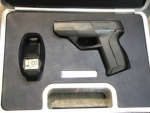
Smart gun in case

Gun ownership in America is polarizing issue and one that seems to be facing a very slow path to solution. And by solution, I mean finding a way to cut down on gun-related deaths without changing legal gun ownership rights. I can't speak for all moderates, but I'm a firm believer that guns do kill people (which isn't always the issue, but they also tend to kill the people next to the people the shooter is aiming at) and that we do have a right to bear arms.

Something has to give.

When a situation reaches this point, and the industry with the R&D money (the gun industry in this situation) refuse to step up, that industry is ripe for disruption. As we move into the future, these disruptions are really what will create the future and how we'll use, own and feel safer around firearms.
Extremis - Iron Man becomes posthuman

ExtremisWarren Ellis introduced the Extremis concept to Iron man in a 6-issue story arc starting in January 2005. This arc changed Tony Stark from a cyborg to a posthuman by introducing nanotechnology into his body and altering his physiology to include direct connections with the Iron Man suit. Ellis introduced many concepts and characters that were used in the Iron Man movie trilogy, especially Iron Man 3.

If you're into superhero comics, this is a short arc you don't want to miss. It's available on Marvel Unlimited or through Amazon. In typical comic-book style, it takes some complex scientific breakthroughs and turn them into a magical elixir, yet it brings many of the reasons we research posthuman adaptation into perspective given Stark's need to deal with the story villains. And there are a few great conversations in which characters wax philosophical about their Frankensteinian need to create a future that might be more monster than they would like.

Tomorrow Now: Envisioning the Next 50 Years

Tomorrow Now book coverBruce Sterling has written three non-fiction books. This is his second and was published in 2003. It's a multilayered work, with seven stages (chapters) based on William Shakespeare's As You Like It, in which Jaques's monologue outlines the seven ages of man as infant, schoolboy, lover, soldier, justice, and at the end of life. Through each stage, Sterling looks at current (at the time) research and runs it out 50 years, to the middle of our century, attempting to paint a picture of how our lives will change.

Tracking emergencies - who gets the data?

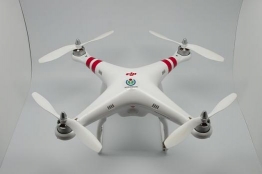
DJI Phantom DroneChemical sensors are capable of detecting and analyzing gases in order to alert us to airborn pollutants from industrial processes, smog, natural events such as volcanic eruption and even terrorist activities (hopefully before they occur). These devices can be arranged wherever we require an awareness of what the air is carrying. US embassies use air quality units to release air quality measurements, sometimes in real time - or not at all.

When there is a major event, awareness of risk conditions for first-responder units is key. This week, Popular Science covered a Connecticut fire department using a drone to identify risk conditions for fire fighters at a quarry. While there isn't much new in using remote controlled devices to minimize the risk to human lives - bomb squads and SWAT teams have used robots for some time to get a look at situations before sending in humans - the drone provided a very different look from the air.

Pages