Government (representation)

Elysium (Film, 2013)

A look at the living area of ElysiumSet in 2154 (140 years from now), the wealthy have fled an ecologically devastated Earth for the space station Elysium where they live what appears to be a an idyllic life in a pseudo-suburban setting filled with clean air, beautiful vistas, and luxurious homes stocked with miracle health machines.

Where will technology and big data take our future?

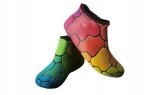
Stratasys 3d printed shoes

Technology is slowly infiltrating every area of our human existence. I read Alistair Croll's Race Alongside the Machine today on re/code and it led me to a reflection on how we humans are being changed by the technology we develop and where this might lead in the future.

When I came up with the original idea for a future-focused site, I immediately created a short list I called "aspects of human existence." I've changed them to "elements of how we live" and use them as story tags, a taxonomy vocabulary in Drupal terms, in order to help users find content. After reading Croll's piece, I decided today's exercise would be to look at the (now much longer) list and see what I can come up with for where current trends and predictions will take us as we continue to combine humans, technology and big data.

Will predictive policing be used to protect both victim and potential perpetrator?

Predictive policing is the use of data to identify crimes before they happen. A system like this monitors all available data feeds watching for trends and triggers that might lead to crime. Once a trend is identified as reching a crisis point, an attempt can be made to halt a crime before it can occur.

Can smart gun technology help resolve the current American firearm debate?

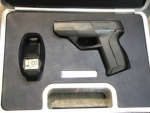
Smart gun in case

Gun ownership in America is polarizing issue and one that seems to be facing a very slow path to solution. And by solution, I mean finding a way to cut down on gun-related deaths without changing legal gun ownership rights. I can't speak for all moderates, but I'm a firm believer that guns do kill people (which isn't always the issue, but they also tend to kill the people next to the people the shooter is aiming at) and that we do have a right to bear arms.

Something has to give.

When a situation reaches this point, and the industry with the R&D money (the gun industry in this situation) refuse to step up, that industry is ripe for disruption. As we move into the future, these disruptions are really what will create the future and how we'll use, own and feel safer around firearms.


Tomorrow Now: Envisioning the Next 50 Years

Tomorrow Now book coverBruce Sterling has written three non-fiction books. This is his second and was published in 2003. It's a multilayered work, with seven stages (chapters) based on William Shakespeare's As You Like It, in which Jaques's monologue outlines the seven ages of man as infant, schoolboy, lover, soldier, justice, and at the end of life. Through each stage, Sterling looks at current (at the time) research and runs it out 50 years, to the middle of our century, attempting to paint a picture of how our lives will change.

Can a flawed humanity create a future with a flawless government?

Karl MarxWars are fought over which flawed ideology works best and communism has turned out to be one of the most flawed, even if the original roots were designed to fix the flaws in the capitalist structures of 19th century Europe. Karl Marx's work developed into 1848's Communist Manifesto and later in Das Kapital in a response to conflict between the more wealthy ownership classes and the labour class that provides the man power for production. Marx viewed Capitalism as "the dictatorship of the bourgeoisie" and made many predictions on how this socioeconomic system would eventually fail due to the internal tension between these two classes. His work would later be used to overthrow nations in order to create failing economic states where the communist effort was misused to create more disproportionate social inequality than found in nearly any other form of representative government.

Tracking emergencies - who gets the data?

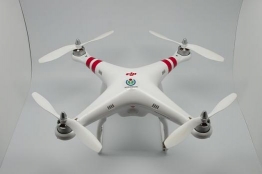
DJI Phantom DroneChemical sensors are capable of detecting and analyzing gases in order to alert us to airborn pollutants from industrial processes, smog, natural events such as volcanic eruption and even terrorist activities (hopefully before they occur). These devices can be arranged wherever we require an awareness of what the air is carrying. US embassies use air quality units to release air quality measurements, sometimes in real time - or not at all.

When there is a major event, awareness of risk conditions for first-responder units is key. This week, Popular Science covered a Connecticut fire department using a drone to identify risk conditions for fire fighters at a quarry. While there isn't much new in using remote controlled devices to minimize the risk to human lives - bomb squads and SWAT teams have used robots for some time to get a look at situations before sending in humans - the drone provided a very different look from the air.

Owning a mobile phone makes you intimately trackable

Dear subscriber, you are registered as a participant in a mass disturbance.

This was the content of a text message received by cell phone carrying protestors in Kiev by the Ukranian government. Using mobile technologies, the government was able to identify all of the phones in certain areas and target them with this warning. It's a message that lets the carrier of the phone know they, or the phone owner, has been identified by private records as participating in the protests - or at least being in the vicinity.

Eradicating Global Poverty

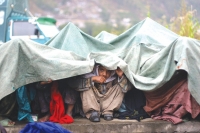
Poor under a tarpJanuary is being celebrated as Poverty Awareness Month. Several articles on the state of poverty have been written, but two of the more interesting ones I've read come from two very different viewpoints. The first is Bill Gates' annual letter, outlinging his concern and attempt to update "3 myths that block progress for the poor." The second is an article by Dale Hanson Bourke, "Why Am I Not Poor?", on Christianity Today where she reflects and contrasts her context and experiences with individuals living in poverty who she has met around the world.

Pages