Government (representation)
Tracking behavior: corporate control or assigning responsibility where it belongs?

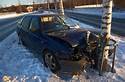
Car hit treeAs greater details of our lives can be tracked, data analysis can show trends in our behavior against the norm. When I view personal privacy, I ask three things:

  1. Why does someone need to know my preferences and tendencies?
  2. Can this data positively impact myself or my family?
  3. Can this data negatively impact myself or my family?

Can DNA be linked to future crime?

Leatherface with a chainsawIn December 2013 an assault on Sandy Hook Elementary ended with the sad deaths of twenty children and six teachers, after the killer took the life of his own mother and before taking his own. Andrew Solomon gives us a look at the killer's father (I refuse to print his name - infamy should not be gifted on a killer) and the fall out in his life a little over a year after the shootings.

How will personal drones impact our society?

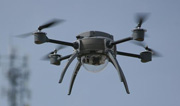
Camera drone in flightNoah Smith offers his assessment of the social impact of  drones on Quartz.  He asserts they will cause the most societal upheaval in 700 years since the adoption of the gun. For military power, Smith is forecasting a shift in battlefield technology towards the use of piloted and eventually autonomous drones and robots.

On course to collapse or a future of abundance?

Deserted farmNews this week from a NASA sponsored study on the possibility of civilization collapse and how it might happen. The study was led by applied mathematician Safa Motesharrei and looked at five factors leading to historical collapses of past civilizations such as the Roman empire: population, climate, water, agriculture, and energy.

Will we have a future of extreme inequality and bountiful resources?

Robot speaking in publicThey say in every utopia there is a subclass for whom it is a dystopia. In mainstream futuristic media, the story often overlooks the economy unless it offers a political statement supporting their view and/or damning the opposition’s take on things. But the future is beginning to look a bit strange. On one side, the ability to provide ample resources in the first world has some questioning if poverty can even exist in countries like the US, Canada, and the original EU member states such as Britain, France and Germany. An article I recall from some time ago asked the question, “Can you be considered poor if you have a flatscreen TV in your home?”

Science fiction is the new R&D

When I imagined Regarding Tomorrow as a social site, part of it was crowdsourcing member ideas to build towards greater accuracy of what the future might hold - specifically how new advancements might impact our cultures. Always on the lookout for information helping me to better understand what the site needs to offer, I ran across three tweets today, all very close to one another, that struck a chord as I consider my first major site refresh.

The first was from Ali Madad:

Public education is about to rush into the 21st century - what will it look like?

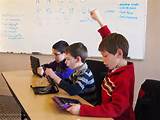
Students in classroom with tabletsK-12 education has been limping along for some time, strung up between two conflicting political viewpoints and hard up for the money required to create a meaningful and beneficial change to an aging system. As technological advancements are refined, schools will be able to offer new and affordable curricula that will change how, when and where students learn and teachers teach.


Will we allow automated robotic law enforcement?

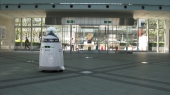
Knightscope K5 unit at a mallAutomated law enforcement would offer a network of systems capable of identifying a crime and gathering enough information on the law-breaker for human officers to identify and consider charges. This is a hot topic issue that will become hotter as technologies merge towards the point where companies will attempt to retail robotic systems to augment human police forces.

Pages