Curated content

Avoiding the worst effects of radioactive fallout

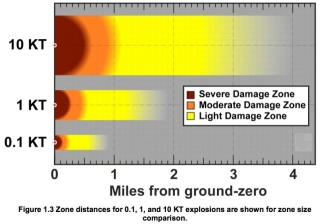
Graph showing damage zone based on tonnage of explosion.Annalee Newitz of IO9 interviewed Michael Dillon, an atmospheric scientist at the Lawrence Livermore National Laboratory. They focused on Dillon's research about how the government should respond in a disaster scenario where an airborne threat can continue to spread. If you're interested in future scenarios happening after a man-made calamity, this is a great source of information.

Interview on IO9

Dillon's study on Royal Society A


Can humans successfully create an artificial intelligence that wouldn't eventually turn against us?

View of human head with intelligent partsIt's a good question and George Dvorsky at IO9 interviews Luke Muehlhauser, Executive Director of the Machine Intelligence Research Institute, discusses his influences and research. I think this quote sums up the importance of his work and why we should all be interested in the expectations for artificial intelligence:

I pretty quickly realized that the intelligence explosion would be the most important event in human history, and that the most important thing I could do would be to help ensure that the intelligence explosion has a positive rather than negative impact — that is, that we end up with a "Friendly" superintelligence rather than an unfriendly or indifferent superintelligence.

Hershey supporting 3D systems to print confections

Chocolate heart3D Systems previously announced products to print your own food. This week, The Hershey Company announced a multi-year partnership with the device maker to develop new ways of bringing 3D printed foodstuffs to market. Hershey is the first major food company to officially announce an interest in 3D printed foods.

Via The Verge


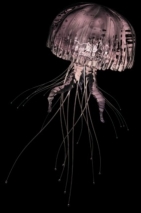
Vincent Fournier's Post Natural History

Jellyfish

Wired offers an overview of photographer Vincent Fournier's Post Natural History artwork, in which he speeds up the evolution of living organisms to incorporate technological capabilities.

These creatures come from the future—an imagined future, based loosely on current research on synthetic biology and genetic engineering. The idea is that these are living species, reprogrammed by mankind to better fit our environment as well as to adapt to new human desires.

Changes towards equality creating a better future

Our march into tomorrow keeps making for better todays. Here are vidoes of three important technologies providing individuals with physical limitations the opportunity to experience and interact with the world around them.

What is Tek RMD - 9:26 long - from Matia Robotics

Read the full article for additional videos.

Increasingly inexpensive telepresence aims at the home

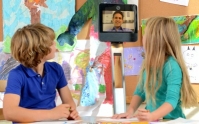
Beam+ telepresence device with two childrenSuitable Technologies has announced a telepresence robot, the Beam+, for just under $2000 (pre-order for $995). The device offers a 10-inch screen using two cameras and 4 microphones for video teleconferencing, which is build onto a stalk and moved about by a three wheeled based controlled by the "visitor" through an application on the their end.


Simple and useful wearable: Spidey sense shirt

Spider Man spider-sense shirtThis year's CES was filled with new wearable technologies looking for the next big thing, but Thinkgeek is selling a tongue-in-cheek wearable as a spidey-sense shirt that vibrates when someone approaches from behind, signaling the wearer a person is within 5 feet.

The device is a novelty, announced just before last year's Comic-Con, but would make great sense as a real wearable or a feature included in a line of self-protection wearables. So much discussion on the benefit of wearables has focused inwards so far. Step tracking or distance measuring was the first real attempt. Tracking body data such as heart rate, blood pressure, blood sugar and such for biorhythm projection is where the current cycle is focused. How long before we focus outward?

New technologies create efficiency, they can impact lower wage employees

Paris taxi drivers are protesting today against both a new tax and some of the new taxi-style services such as Uber. From the Cnet article, a group of protestors attacked one Uber service vehicle, smashing a window and slashing a tire. Another group later egged and floured a Welsh woman traveling with her 1 and 13 year old children. The attacks are based on a fear these new services could impact the income of taxi drivers in France, which is probably true.

Childlike learning at any age

Takai Hensch, a Harvard professor of molecular and cellular biology, is researching valproic acid* to enhance learning. VPA is used to treat several conditions (see below*), but Hensch is researching the chemical's ability to provide adult brains with the plasticity children experience when it comes to learning new skills and to absorb new information.

In his research (via PubMed.gov), Hensch is focused on teaching adults perfect pitch. But the applications could enable learning in nearly any field. The expectation is an increase in how well adults can take in information in order to speed their learning of new material. When you consider how long it takes to master some specialties, this could help learners increase the speed through which they can cover material and provide extra years of work at higher levels. It would be a major breakthrough for increasing the efficiency of preparing humans for nearly all types of work.

Pages