On Earth

What are the long term social impacts of neuro-enhancing technologies?

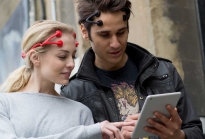
A couple wearing Foc.us devicesWired's Christian Jarrett covers a new technology designed to "overclock your brain." It's a great article in which he thoroughly covers the spectrum of what benefits the Foc.us offers, a bit of history, and some of the warnings we should be aware of.

For this article, let's pretend it is possible to use electrical current to stimulate our brains, making the user "smarter." What are the social impacts? Let's look at a few.

The 'True Love' Bra

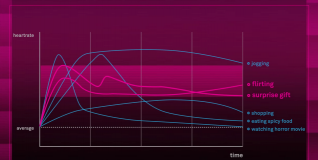
Heart rate responses to various input The Japanese lingerie manufacturer Ravijour has a new product out they call the True Love Tester bra. You can watch the video linked off the Popular Science article for their presentation of how it works, but the truly interesting detail is the graph of heart rate responses to varying stimuli - and how a company looking to market a new product uses our data.

If I understand this correctly, the bra senses the wearer's heart rate and when it "exceeds a certain value, the bra hook is unlocked automatically." A situation where a biological response can act as a trigger may be a bit part of our wearable future, but is it something we can trust or simply a gizmo to play with?

While the novelty isn't world-changing, it is an example of how our biodata can be used in different ways and how wearables can impact the world around us using our biology as a key.

Artifact from the Future: Swap spit for rides (not as bad as it sounds)

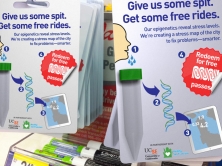
Artifact from the Future: Give Some Spit, Get a Free Ride - See more at: http://www.iftf.org/future-now/article-detail/artifact-from-the-future-give-some-spit-get-a-free-ride/#sthash.mP4l3MBI.dpuf Another IFTF artifact this week. This time offering a trade of DNA from your spit with an offer of free transportation with the purpose of identifying "toxins, the environment, even daily stressors."

It's an interesting idea and the trade of free for personal data keeps trending upwards. Just last week we read about Glow First, the non-profit arm of the Glow app where women can earn money towards fertility treatment by filling out ten months of fertility data.

How much data will we provide? How will it be stored? For how long? There are so many ways FREE can get us to give up details of our lives. Girls Gone Wild has proven how intimate details can be leveraged from a free T-shirt. So this view of the future doesn't beg questions about spit or transportation. Instead, I ask what it will take for us to become inoculated against so freely giving up our data/bodies/intimate details in return for the free of email/prizes/social media?

Owning a mobile phone makes you intimately trackable

Dear subscriber, you are registered as a participant in a mass disturbance.

This was the content of a text message received by cell phone carrying protestors in Kiev by the Ukranian government. Using mobile technologies, the government was able to identify all of the phones in certain areas and target them with this warning. It's a message that lets the carrier of the phone know they, or the phone owner, has been identified by private records as participating in the protests - or at least being in the vicinity.

Nanoribbon electricity generation from human organs

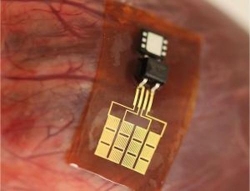
Nanoribbon on human organResearchers at the University of Illinois-Champaign have created a new flexible technology, a nanoribbon, that attaches to human organs and is capable of generating electricity as the organ moves. The current technology is focused on providing power for pacemakers so long term use of these devices could require less surgeries and also be less intrusive in the body.

The other half of the breakthrough is the ability to generate up to 8 volts of electricity from a single device embedded in the body, enough energy to power low-energy devices as long as the nanoribbon (and body) continue to function. Looking long-term, this makes it possible to go past the wearables marked into embedded sensors, monitors and even controllers (OH MY!).

Tiny living space with space-saving ideas

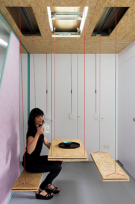
Disappearing tableBack in November, I posted about Japanese Micro-apartments and how they might offer the feeling of space confinement on long-voyage space vessels. On a happier note, Spanish architecture firm Elii takes a tiny (620 square feet) living space and redesigns it to offer useful elements such as hidden storage, disappearing eating space and maximal sunlight penetration.

Yes, there is now an app for when to keep it in your pants (or take them off)

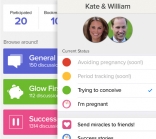
Glow screen view Glow is an app for iOS and Android devices designed to assist women (and couples) with tracking and controlling their reproductive health by identifying their activity cycle. Founded by PayPal co-founder Max Levchin, the company offer two ways to help women or couples looking to conceive (or not).

Eradicating Global Poverty

Poor under a tarpJanuary is being celebrated as Poverty Awareness Month. Several articles on the state of poverty have been written, but two of the more interesting ones I've read come from two very different viewpoints. The first is Bill Gates' annual letter, outlinging his concern and attempt to update "3 myths that block progress for the poor." The second is an article by Dale Hanson Bourke, "Why Am I Not Poor?", on Christianity Today where she reflects and contrasts her context and experiences with individuals living in poverty who she has met around the world.

RoboEarth: a learning community for robots?

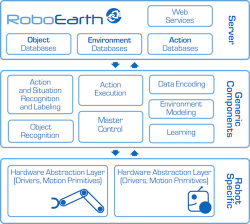
RoboEarth layers of services diagramRoboEarth is a project designed to network robots so each can add and pull information from a central repository. By sharing their "experiences", the robots can learn more quickly and access content to help them adapt to each process. The company's website provides this explanation of the online system:

"The RoboEarth Cloud Engine (also called Rapyuta) makes powerful computation available to robots. It allows robots to offload their heavy computation to secure computing environments in the cloud with minimal configuration. The Cloud Engine’s computing environments provide high bandwidth access to the RoboEarth knowledge repository enabling robots to benefit from the experience of other robots."

Pages