On Earth

Using beacons to more effectively remind or market to shoppers

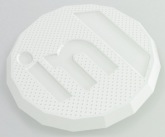
InMarket Beacon

Back at Apple's 2013 event, they mentioned iBeacon as part of their new upgrades. This technology uses Bluetooth Low Energy to alert your phone when it comes within range of a beacon - a small, low-powered device used to identify a place. Sneaky Apple not only announced a major competitor to NFC (Near Field Communiction), they also announced that some of their products (and others) have built in beacon functionality and have had them for some time. With the rollout of iOS 7 and OS X 10.9, there are suddenly tens of millions of iBeacon ready devices which can both seek or offer location awareness.

Why is this important? Bluetooth low energy technology currently offers a range of 50 meters/160 feet using a trickle of energy (less than 15 milliamps according to this page). Your phone is suddenly able to identify interesting or even necessary locations within that range with very little impact on the device itself. This is a major step towards the Internet of Things and, as with most leaps forward, will have both positive and negative impacts on our lives and privacy.

New technologies create efficiency, they can impact lower wage employees

Paris taxi drivers are protesting today against both a new tax and some of the new taxi-style services such as Uber. From the Cnet article, a group of protestors attacked one Uber service vehicle, smashing a window and slashing a tire. Another group later egged and floured a Welsh woman traveling with her 1 and 13 year old children. The attacks are based on a fear these new services could impact the income of taxi drivers in France, which is probably true.

Childlike learning at any age

Takai Hensch, a Harvard professor of molecular and cellular biology, is researching valproic acid* to enhance learning. VPA is used to treat several conditions (see below*), but Hensch is researching the chemical's ability to provide adult brains with the plasticity children experience when it comes to learning new skills and to absorb new information.

In his research (via PubMed.gov), Hensch is focused on teaching adults perfect pitch. But the applications could enable learning in nearly any field. The expectation is an increase in how well adults can take in information in order to speed their learning of new material. When you consider how long it takes to master some specialties, this could help learners increase the speed through which they can cover material and provide extra years of work at higher levels. It would be a major breakthrough for increasing the efficiency of preparing humans for nearly all types of work.
3D printed homes in a day

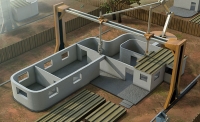
3D house printerProfessor Behrokh Khoshnevis from The University of Southern California is testing a process called Contour Crafting, which is a way of 3D printing homes. It's basically a robot that extrudes concrete to provide the frame for a building. The process begins by printing hollow walls that are then filled with a solid wall of concrete for maximal structure. From there, human workers complete the home by hanging doors, installing windows, laying flooring, etc...

Check MSN's article for a better overview. Freshome's article includes Dr Khoshnevis' TEDx video.

The human face in 100,000 years and why it might change

Faces of our futureMother Nature Network has an article on speculative work by artist Nickolay Lamm and computational genomics expert Dr. Alan Kwan. They started with the question: “What do you think the human face might look like in 100,000 years and why?” and offered their view of how mankind MIGHT adapt over that time.

How economic warfare drives ecological destruction

Shanghai smogToo many future visionaries depict a future full of clean energy and cleaner air. It's as if our need for clean air makes us willing to ignore the development and natural resource costs associated with powering all of these high-energy devices we keep adding to our lives. I'm beginning to believe most of us have certain fears which keep us from crossing a line where everything crashes into a horrific vision where every breath has a painful consequence.

IFTF: Feral Zones

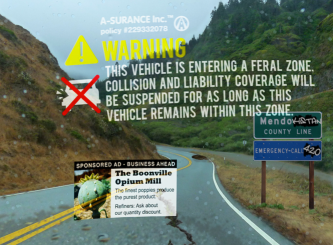
MendikostanIFTF blog posted this Artifact from the Future (click the thumbnail to see the full image on their site). I'm of the opinion that self-driving vehicles will eventually be forced upon us due to the expense of insuring our vehicles with a higher fee when we take over the driving.

A Robotic Petting Zoo

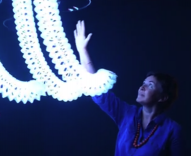
Image of robotic petting zooMinimaforms presented Petting Zoo, an interactive display designed to respond to human touch and movement. Using a Kinect camera and software designed to respond with emotions, the exhibition provided three "pets" with three different patterns of responses and a basic machine learning allows each to develop behaviors based on input from the situation.

Preparing for limited living quarters for deep space travel

View of Japanese mini-apartmentTiny living quarters only get love in mainstream science fiction unless there is a need to present a stressful or different setting. Too much of our space travel is shown on grand ships with lounges, hotel-sized quarters and gravity. The truth is, our first manned deep-space voyages are more likely to occur on ships designed like the ISS than the USS Enterprise. Can we thrive or even manage normal levels of stress in such conditions?

Pages