Medicine (health)

Suicide in an aging world: could it become an industry?

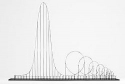
Suicide roller coasterThe Euthanasia Coaster is a roller coaster concept by designer Julijonas Urbonas. The coaster is designed to generate a steady 10g of force on the riders for long enough to cause cerebral hypoxia. Could death by amusement ride be part of our future or is this just too sci-fi to consider?

According to the American Foundation for Suicide Prevention, there were 38,000 suicides reported in 2010. From these figures, the age of 85 and over has remained among the two highest categories since 2000 (and before if we notice this demographic was 20% of all suicides in 2000 - 6 points higher than the next demographic). Only since the most recent economic instability has the age 45-64 moved to the top. Before that, the numbers followed a trend from youngest to oldest with greater age equaling greater rates of suicide.

On course to collapse or a future of abundance?

Deserted farmNews this week from a NASA sponsored study on the possibility of civilization collapse and how it might happen. The study was led by applied mathematician Safa Motesharrei and looked at five factors leading to historical collapses of past civilizations such as the Roman empire: population, climate, water, agriculture, and energy.

2030: A Day in the Life of Tomorrow's Kids

2030 book coverSo much energy goes into the future, both preparing for it and finding ways to retail it, but there aren't many good resources for the kids who will inherit it. 2030: A Day in the Life of Tomorrow's Kids is just that - a resource to help today's kids understand a bit of what their future might hold.

It's a nice resource and at only 30 pages long, it manages to cover a wide range of material, including clothing, communications, living space, careers, our populations, housing developments, transportation, recreation and education. The final page includes a nice list of books, reports and websites the reader can access for additional information.

Elysium (Film, 2013)

A look at the living area of ElysiumSet in 2154 (140 years from now), the wealthy have fled an ecologically devastated Earth for the space station Elysium where they live what appears to be a an idyllic life in a pseudo-suburban setting filled with clean air, beautiful vistas, and luxurious homes stocked with miracle health machines.

Where will technology and big data take our future?

Stratasys 3d printed shoes

Technology is slowly infiltrating every area of our human existence. I read Alistair Croll's Race Alongside the Machine today on re/code and it led me to a reflection on how we humans are being changed by the technology we develop and where this might lead in the future.

When I came up with the original idea for a future-focused site, I immediately created a short list I called "aspects of human existence." I've changed them to "elements of how we live" and use them as story tags, a taxonomy vocabulary in Drupal terms, in order to help users find content. After reading Croll's piece, I decided today's exercise would be to look at the (now much longer) list and see what I can come up with for where current trends and predictions will take us as we continue to combine humans, technology and big data.

Can genetic testing identify Olympic level athletic potential?

Usain Bolt The premise of the Olympics is to measure and reward the greatest human ability at various skills or sports. Modern pharmacology offers many substances identified as potentially beneficial to an athlete - meaning they give an unfair advantage to a competitor - the World Anti-Doping Agency provides a nine page handout identifying substances for which an athlete can be disqualified. With so much pressure on the athletes and so much money for sponsorships on the line, there are substantial reasons to cheat for those who are less sporting.

That doesn't mean there aren't other ways to help athletes reach or maintain their potential. In addition to regular training and hiring the best coaches, athletes also use the services of dieticians, massage therapists, sleep counselors, hydration specialists and gait analysis professionals in order to smooth every bump in their lifestyle, conditioning and performance. Some athletes even choose to sleep in a chamber that mimics high-altitude air quality to increase performance. And as modern research enables more experiments finding ways to benefit athletes that aren't cheating, by eliminating hurdles that keep athletes from reaching their peak performance, we'll hear of more bizarre - and questionable - methods athletes will use to enhance their skills.

What are the long term social impacts of neuro-enhancing technologies?

A couple wearing Foc.us devicesWired's Christian Jarrett covers a new technology designed to "overclock your brain." It's a great article in which he thoroughly covers the spectrum of what benefits the Foc.us offers, a bit of history, and some of the warnings we should be aware of.

For this article, let's pretend it is possible to use electrical current to stimulate our brains, making the user "smarter." What are the social impacts? Let's look at a few.

Nanoribbon electricity generation from human organs

Nanoribbon on human organResearchers at the University of Illinois-Champaign have created a new flexible technology, a nanoribbon, that attaches to human organs and is capable of generating electricity as the organ moves. The current technology is focused on providing power for pacemakers so long term use of these devices could require less surgeries and also be less intrusive in the body.

The other half of the breakthrough is the ability to generate up to 8 volts of electricity from a single device embedded in the body, enough energy to power low-energy devices as long as the nanoribbon (and body) continue to function. Looking long-term, this makes it possible to go past the wearables marked into embedded sensors, monitors and even controllers (OH MY!).

Eradicating Global Poverty

Poor under a tarpJanuary is being celebrated as Poverty Awareness Month. Several articles on the state of poverty have been written, but two of the more interesting ones I've read come from two very different viewpoints. The first is Bill Gates' annual letter, outlinging his concern and attempt to update "3 myths that block progress for the poor." The second is an article by Dale Hanson Bourke, "Why Am I Not Poor?", on Christianity Today where she reflects and contrasts her context and experiences with individuals living in poverty who she has met around the world.

Pages